Despite Headwinds, Alabama Gains in 4th Grade Reading and Math
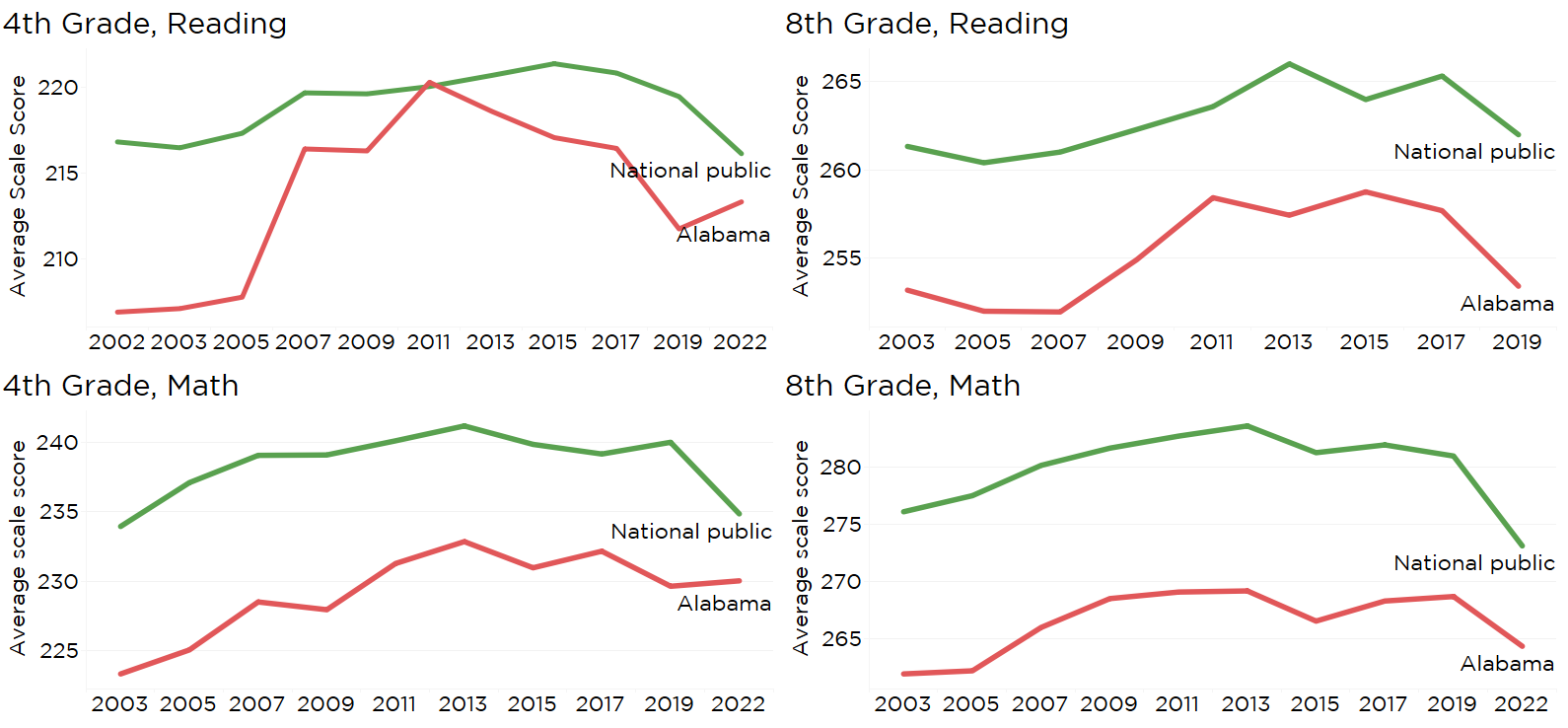
Alabama 4th-grade students performed better in both reading and math between 2019 and 2022, leading to improved national rankings for Alabama on The Nation’s Report Card, the National Assessment of Educational Progress (NAEP). That progress came despite the pandemic, which took a heavy toll on academic performance nationwide. Nationally, NAEP scale scores recorded their worst drops ever.
Alabama was the only state where 4th graders improved in math performance. It was one of only five states to see improvement in Grade 4 reading. Only Louisiana had a higher gain in 4th-grade reading.
To be clear, Alabama’s average scale score gain in both reading and math was not large enough to be considered statistically significant, but, when compared to sizeable scale score declines in many other states, the shift was notable. Alabama’s 8th-grade scale scores were down in reading and math, though, in the case of math, because Alabama lost less ground than other states its national rank improved.
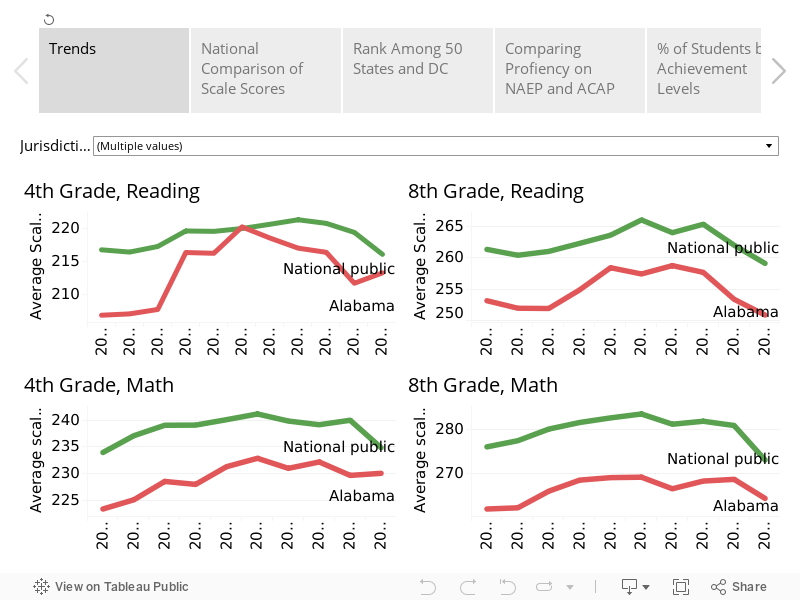
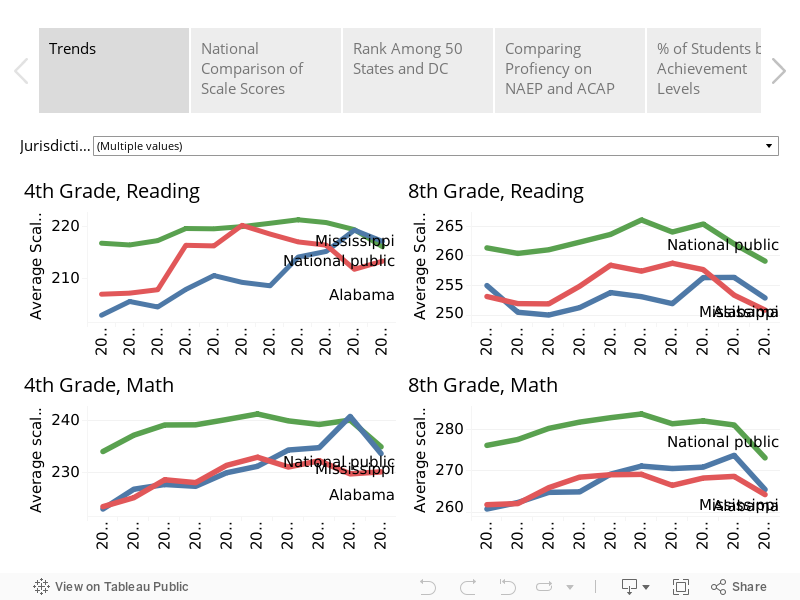
Figure 1. NAEP Performance over time, Alabama vs. U.S.
NAEP results are derived from standardized tests given to a representative sample of students in each state. The most recent test was administered in the spring of 2022. The NAEP is the only assessment that is given in every state and thus provides comparative information across the nation.
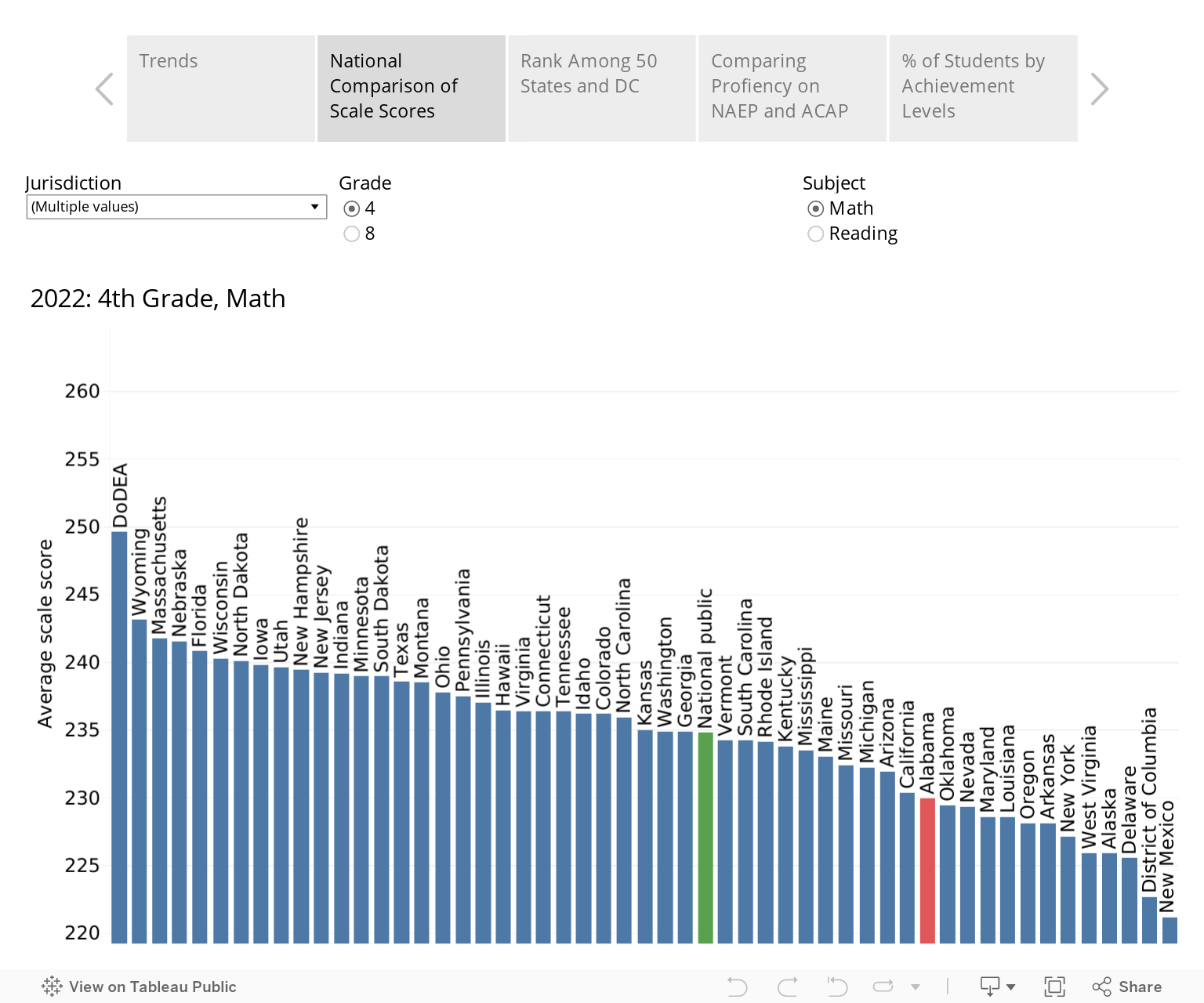
Figure 2. Average NAEP scale scores for U.S. States, 2022. Menus change views by grades and subject
Similar findings from state-level assessments
In a separate analysis of state-level assessment data, Alabama’s results have gotten national attention. An analysis produced by educational researchers and shared with al.com showed that Alabama school districts showed greater stability and improvement from 2019 to 2022 than schools in much of the rest of the country.
Since 2003, Alabama students have ranked at or near the bottom in math on the NAEP in both grades tested, 4th and 8th. In reading, Alabama 4th graders had improved enough to meet the national average by 2011 but drifted downward in subsequent years. Alabama 8th-grade reading scores have been in the bottom five consistently.
In 2019, Alabama 4th graders ranked No. 51 in math compared with students in other states and the District of Columbia. In 2022, Alabama 4th graders ranked 39th. In reading, Alabama 4th grade student performance rose from 48 to 38.
Average scale scores for Alabama 8th graders declined in both reading and math. However, other states experienced steeper drops in math, so Alabama’s rank climbed from 51 to 46. In 8th-grade reading, Alabama maintained its rank of 48 out of 51.
Figure 3. Scale score rank of states, by grade and subject
The improvements in 2022 indicate some progress, but Alabama has a long way to go before it is providing a nationally competitive education to all students. In the 2022 results, students in Mississippi once again scored ahead of Alabama in both reading and math at both grade levels. Alabama did close that gap with Mississippi in math and in 4th-grade reading, but the gap widened in 8th-grade reading.
Figure 4. Alabama, Mississippi, and U.S. NAEP scores compared
Results coincide with investments
The positive results coincide with the recent infusion of money and effort in early grades reading. The Alabama Literacy Act in 2019 was accompanied by increased funding for the Alabama Reading Initiative (ARI). ARI provides professional development and support for teachers. The state also requires a dedicated reading coach to work with K-3 teachers. The coach and teachers monitor reading data, identify struggling readers, and provide enhanced support. That includes providing services from specialists trained to diagnose and work with children with learning challenges like dyslexia.
In math, Alabama realigned its math standards in 2019, with one of the aims being to align better with national expectations represented by the NAEP. The Alabama Math and Science and Technology Initiative (AMSTI) also altered its tactics, allowing it to reach more schools and teachers. Extra federal relief money also allowed some districts to hire math coaches to work with teachers. In 2022, the Alabama Legislature passed the Alabama Numeracy Act, which provides increased funding and calls for a strategic approach to improving math performance, borrowing some of the approaches deployed to support literacy.
While the gains on the NAEP in 4th-grade reading and math might not be statistically significant, those results mirror improvements Alabama students posted on the Alabama Comprehensive Assessment Program (ACAP), the state’s standardized test. Compared to 2021, the state saw gains, particularly in early grades mathematics.
Comparing NAEP to Alabama’s test of proficiency
Alabama has administered several different achievement tests over the past decade, which leads to confusion about how Alabama students are performing. Complicating the picture is that the different tests, including the NAEP, have different measures of proficiency. Figure 5 compares the results of the 2022 NAEP with the results of the ACAP, also given in the spring of 2022.
The results of both tests are expressed in terms of the percentage of students who scored proficient or above on the tests.
The bars in red represent the percentage of Alabama students scoring proficient on the NAEP and on the ACAP at both grade levels and in both subjects.
The green bars present the percentage of students in the U.S. that scored proficient on the NAEP.
Figure 5. Scores from Alabama’s ACAP vs. NAEP, 2022, by subject and grade
Comparing NAEP and ACAP results, it is apparent that Alabama’s ACAP English Language Arts assessment is much more generous when it comes to grading student proficiency in English.
In contrast, ACAP produces results similar to NAEP’s in math.
Except for the ELA scores on the ACAP, both tests indicate that only somewhere around 20-30% are reaching proficiency. The National Assessment Governing Board sets proficiency levels and describes them as follows: “Students performing at or above the NAEP Proficient level on NAEP assessments demonstrate solid academic performance and competency over challenging subject matter.” They specify that the NAEP Proficient achievement level does not represent “grade level proficiency” as determined by other state assessment standards.
Figure 6 presents three levels of achievement on the NAEP: the percentage of Alabama students scoring “at or above Basic,” the percentage scoring “at or above Proficient,” and the percentage of students scoring “Advanced.”
Figure 6. Percentage of Alabama Students at each NAEP Achievement Level, 2003-2022
In 4th grade reading and math, students today are ahead of where they were a decade ago: a greater percentage of students are scoring above basic, above proficient, and at the advanced levels.
In 8th-grade math, there has been some progress, while 8th-grade reading gains seen in 2015 and 2017 have fallen away substantially.
Conclusion
The NAEP and the ACAP have provided evidence that Alabama educators and students can improve even in challenging circumstances. The investment and attention to early grades reading and mathematics need to be sustained and accelerated. Alabama has a long way to go to catch the national average or even our neighboring state, Mississippi.
But even as further gains are pursued for younger learners, Alabama needs to find ways to sustain learning gains into middle and high school. The erosion in proficiency in the middle grades could have lasting negative effects in preparing students for high school, college, and careers.
Demographic Change in Alabama, its Counties, and Cities, 2010-2020
Alabama’s population became more diverse over the past decade as the number of non-Hispanic Whites declined and more Alabamians identified as being of a different race, a mixture of races, or of Hispanic descent. In 2010, 67% of Alabama’s population identified as non-Hispanic White; By 2020, that percentage was down to 63%. That’s according to 2020 Census data released earlier this year.
The 2020 Census marked the first decennial census in history that either Alabama or the U.S. recorded a decline in the White population. Demographers expected a decline due to falling birth rates and the aging of the population, including the unusually large and predominately White Baby Boom population. Black, Hispanic, Asian, and American Indian populations all increased. But the biggest change was in the number of people identifying as More than One Race, indicating an erosion in traditional ethnic and racial distinctions.
The Census Bureau cautions that some portion of the decline in the “Non-Hispanic White alone” population is likely due to changes in how people responded to new wording on the race question. The Census Bureau changed the wording and presentation of the race question on the 2020 Census. In 2020, for the first time, the “White” choice was followed by example countries of origin in Europe, the Middle East, and North Africa. Similarly, the Black or African American option listed African and Caribbean nations as example origins. All respondents were asked to elaborate on their origins in a text box below their selection. This change from 2010 appears to have led more individuals to reclassify themselves as not being “White alone” but instead as being of more than one race or origin. Regardless, the Bureau believes the new totals present a more accurate picture of an increasingly diverse nation.
Nationally, the non-Hispanic “White alone” population decreased by 5 million or 2.6% from 2010 to 2020.
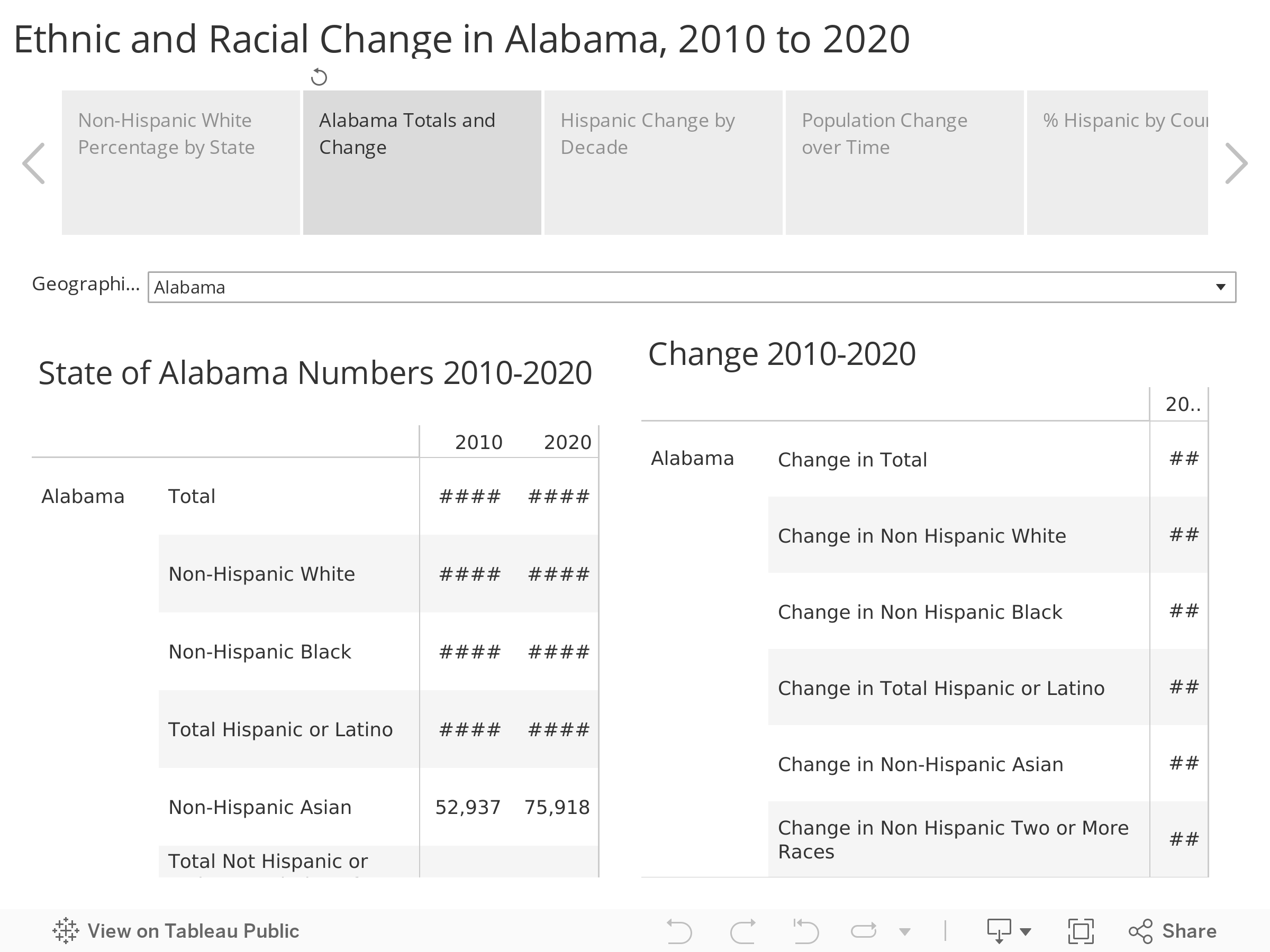
In Alabama, that population declined by 33,000, from 3.20 million to 3.17 million. Meanwhile, the number of people identifying as non-Hispanic and of more than one race far exceeded the increase in any other category, 124,173, compared to the 78,445 increase in the Hispanic population, the second fastest growing group. The number of non-Hispanic residents who reported themselves as White in combination with another race rose by 118,249, a 222% increase, from 53,260 to 171,509, from 1.2% of the population to 3.6%. The number of respondents who reported themselves as Black in Combination with another race also rose sharply, up 130% in Alabama, the third highest growth rate in the country in that category, a numerical increase of 38,767 over 2010.
Hispanics now make up 5.3% of the Alabama population, while non-Hispanic Blacks make up 25.6%. Non-Hispanic individuals of more than one race make up 3.7% of the population, now the fourth largest demographic group.
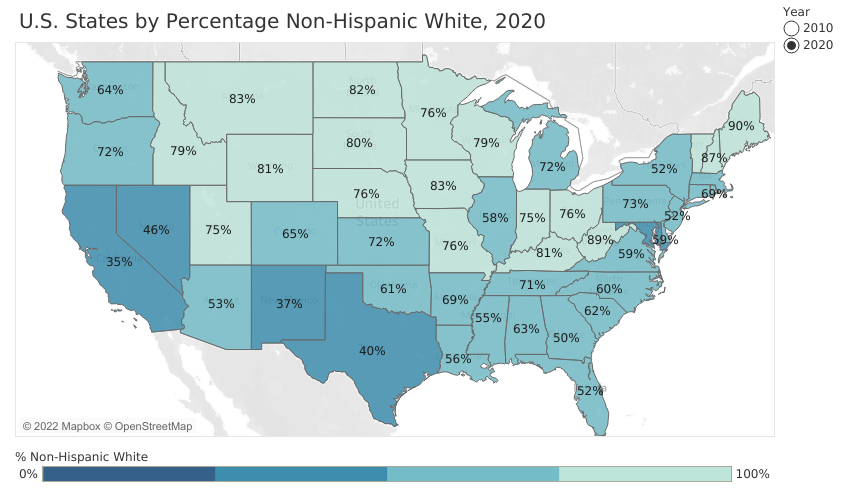
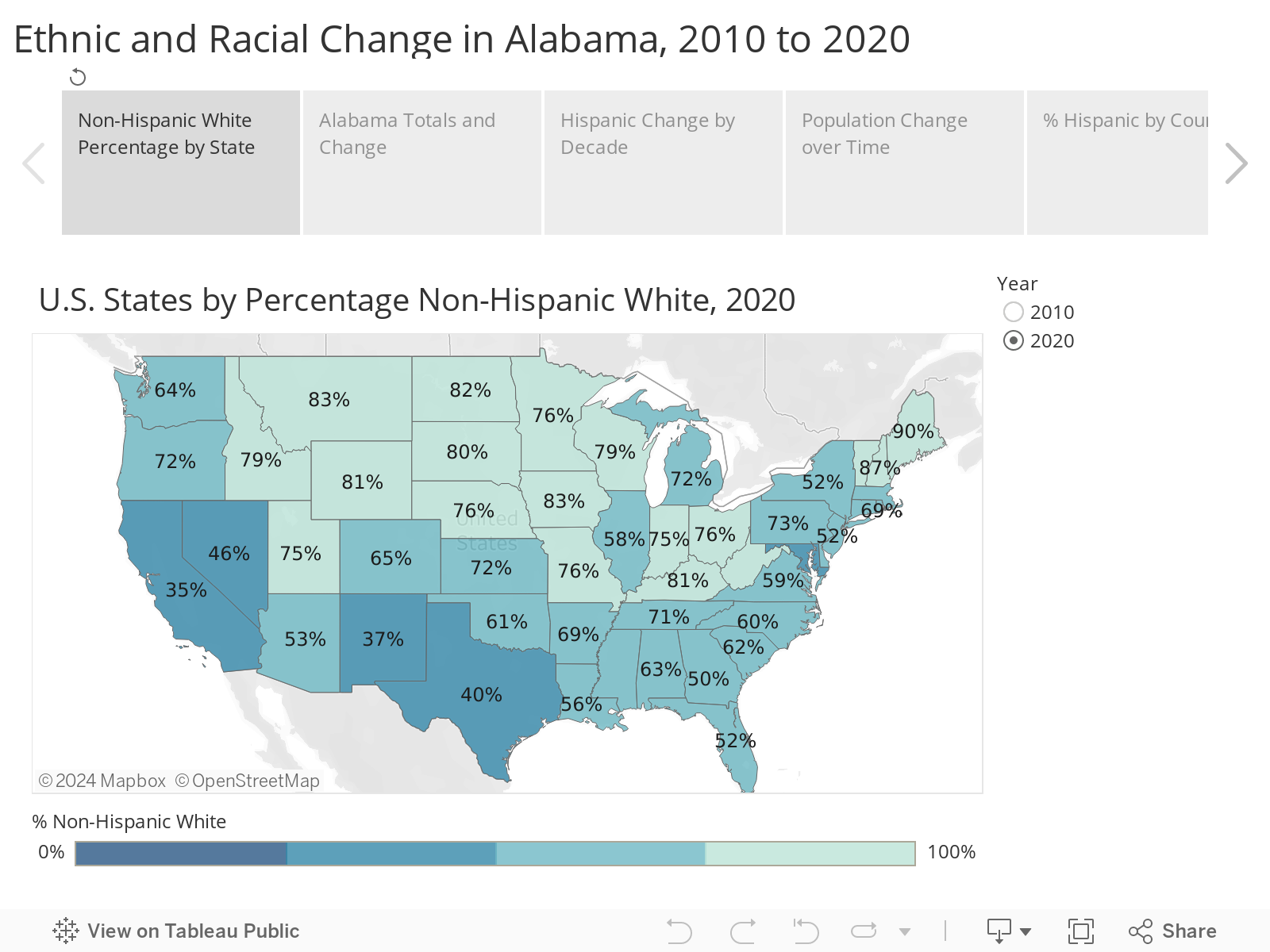
Both in Alabama and across the country, non-Hispanic whites remain by far the largest racial group representing 58% of the population nationally and 63% of the population in Alabama. Alabama’s non-Hispanic white population percentage ranks No. 30 among the states. The state with the highest share of its population identifying as non-Hispanic White was Maine at 90%, followed by West Virginia (89%), Vermont (89%), and New Hampshire (87%).
Hawaii has the lowest percentage of non-Hispanic whites, 22%, followed by California (35%), New Mexico (40%), and Texas (40%). Among its Southeastern neighbors, Georgia’s population in 2020 was 50% non-Hispanic white, while Florida’s was 52%. In all states besides Hawaii, non-Hispanic whites decreased as a percentage of the total state population.
Hispanic or Latino growth rate slows
Unlike the changes to the Census question on race, the question of whether or not the individual is of Hispanic or Latino origin has been consistent for several administrations of the Census. The official definition of “Hispanic or Latino” is a person of Cuban, Mexican, Puerto Rican, South or Central American, or other Spanish culture or origin, regardless of race.
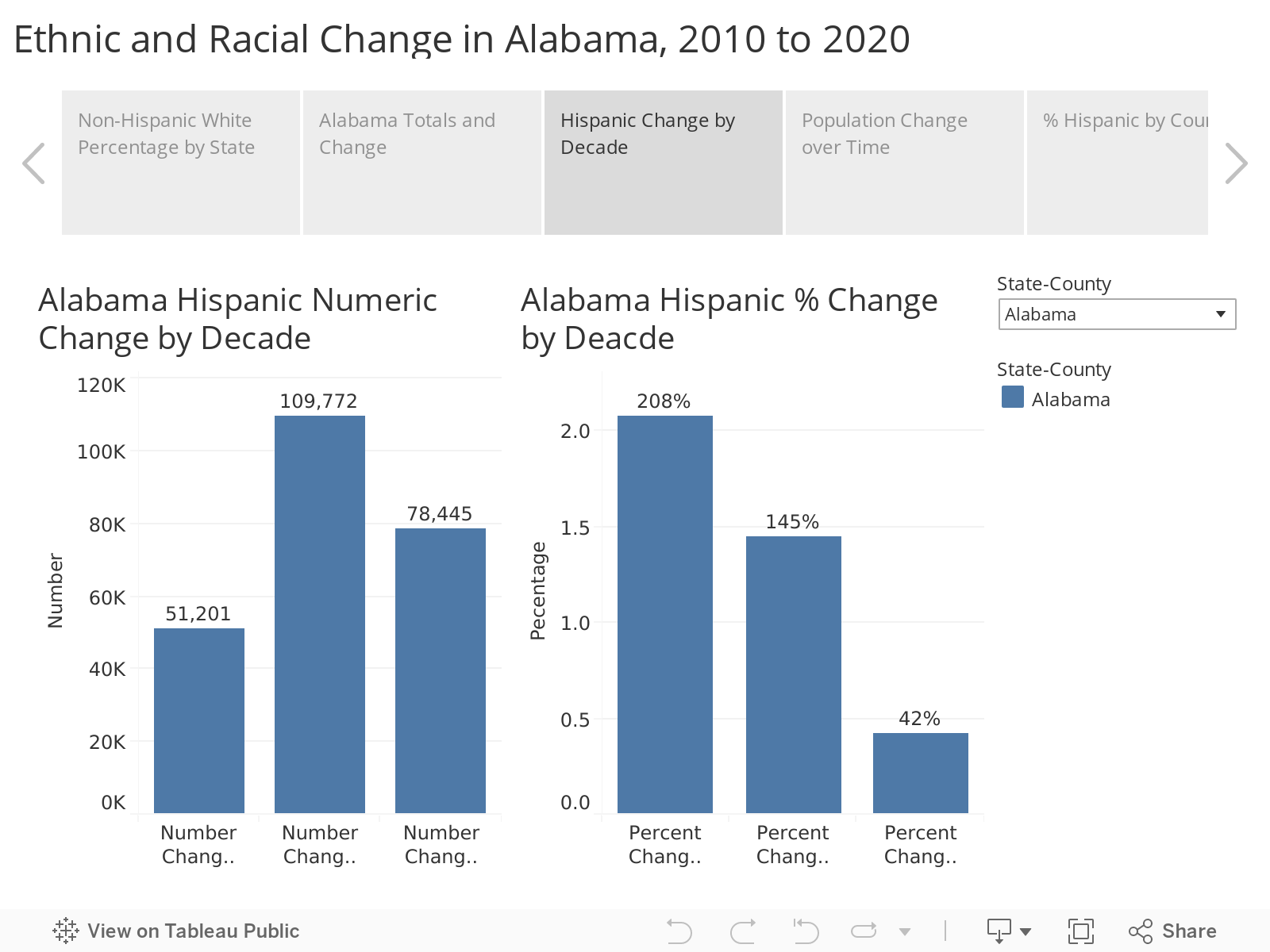
The number of Alabama residents identifying as Hispanic or Latino continued to grow between 2010 and 2020, but at a more modest pace than in previous decades. Alabama’s Hispanic population increased from 78,445 to 264,047, an increase of 42% over the course of the decade. In 2010, Hispanic or Latino individuals made up 3.9% of the Alabama population; by 2020, 5.3%.
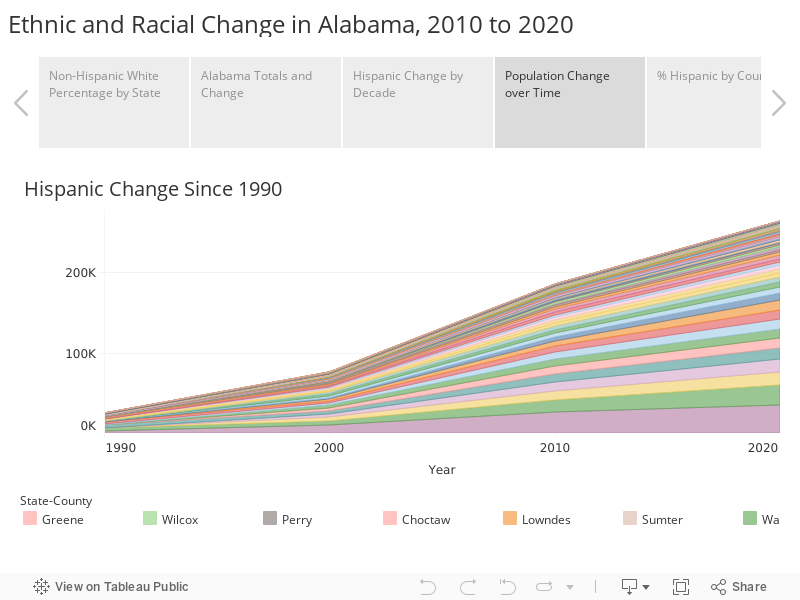
The chart below presents decennial Census results from the U.S. Census Bureau supplemented with Census counts from the 2000 and 1990 Census analyzed by the Alabama State Data Center at the University of Alabama’s Center for Business and Economic Research.
Even without immigration, the Hispanic and Latino population will likely continue to grow more rapidly than the non-Hispanic White population because Hispanics are younger and more likely to be of child-bearing age.
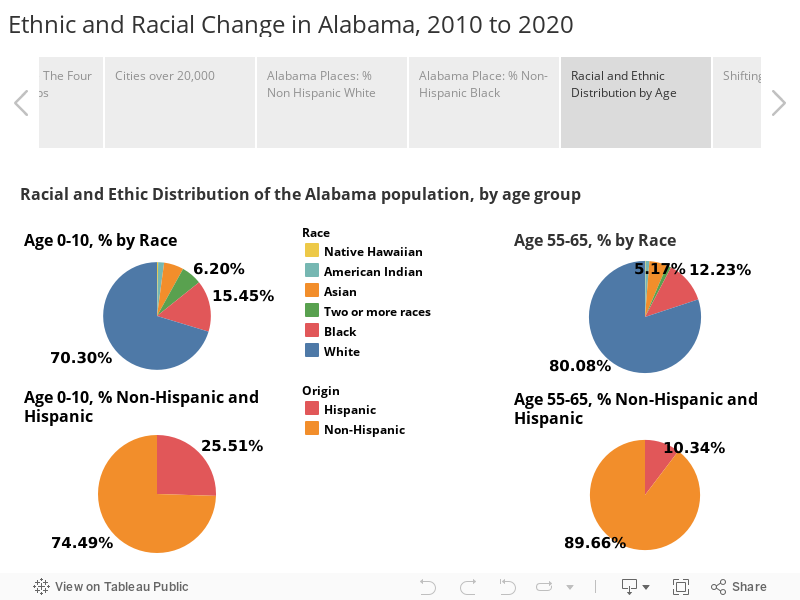
The median age of non-Hispanic Whites in Alabama is 43. The median age among Hispanics is 25. Over 8% of the Alabama population under 18 is Hispanic compared to less than 2% of the population 55 and above.
Also, Hispanic mothers have a higher total fertility rate than other demographic groups. The Total Fertility Rate is the number of births that a hypothetical group of 1,000 women would have over their lifetimes. Reducing that rate to an average per female, Hispanic females average 1.9 children over a lifetime, Blacks, 1.7; for Whites, 1.5.
Demographers calculate the replacement level, the rate of births it would take to replace any given generation, to be 2.1 children per female. Generally, since the 1970s and consistently since 2008, the U.S. birth rate has been below replacement level, meaning that, absent immigration, the population will eventually decrease because not enough children are being born to replace the previous generation.
Hispanic and Latino individuals are widely dispersed across the state, appearing in every county. Much of the Hispanic population growth likely came from natural increase, state residents giving birth, rather than new immigration. For Alabama, the Census Bureau estimated that 57% of all population growth came from natural increase, 32% from international immigration, and 11% from domestic migration.
Hispanic Population in Alabama Counties
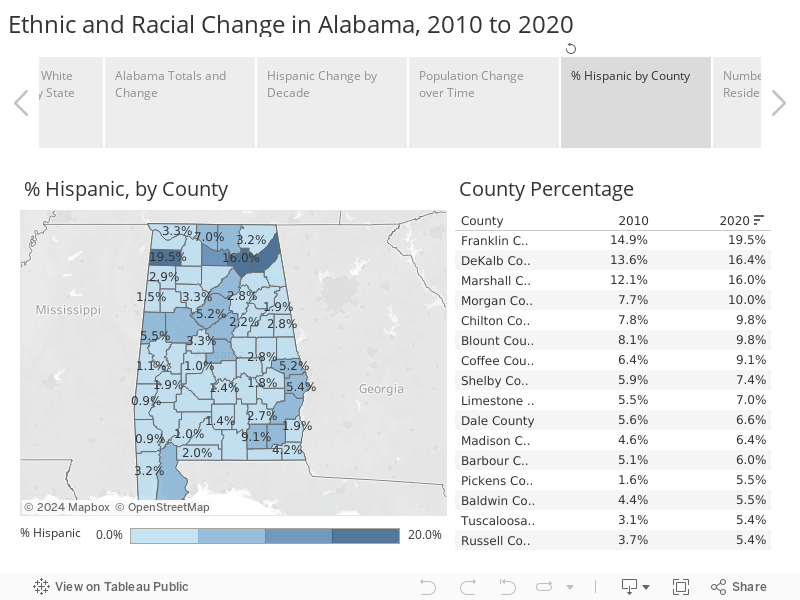
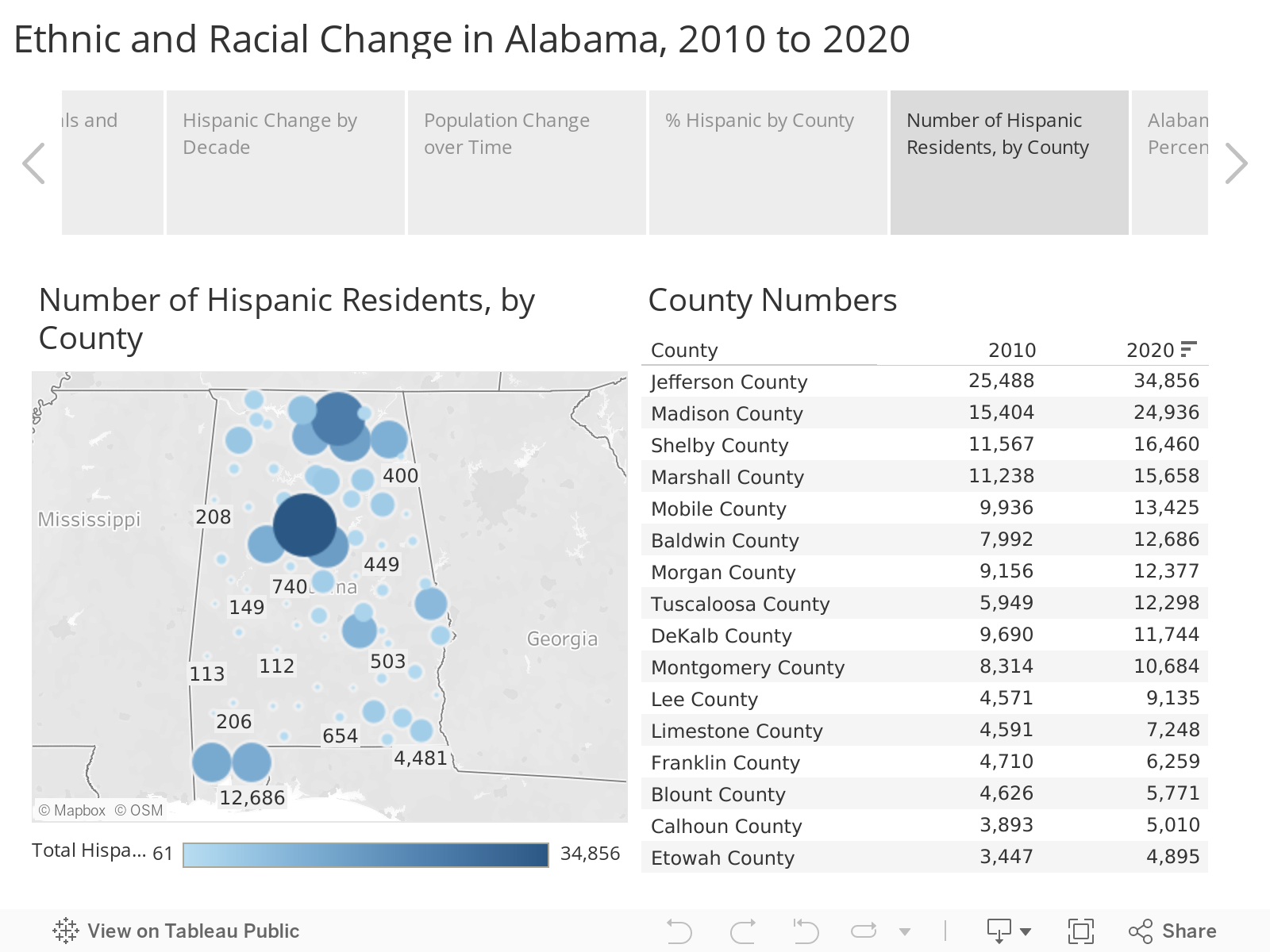
In Alabama, the counties with the highest percentage of Hispanic residents are in North Alabama, in a band stretching from Franklin County in the west to DeKalb County in the east. Those counties where the Hispanic population is most concentrated are also centers for the poultry industry, which was an initial draw for Hispanics settling in Alabama. Secondary concentrations are evident in Tuscaloosa and Pickens counties and in Southeast Alabama’s Wiregrass region. Those are also coincidental with poultry industry concentrations. Higher percentages of Hispanics can also be found in counties like Shelby, Madison, Baldwin, Lee, and Limestone, where residential and commercial construction jobs are plentiful.
But in terms of numbers, the most Hispanic and Latino residents are found in Alabama’s more populated metro counties. Jefferson County’s Hispanic population is now nearly 35,000, while neighboring Shelby is home to over 16,000. Madison County is second in the state with almost 25,000 Hispanic and Latino residents, complemented by strong Hispanic populations in neighboring Marshall (15,658) and Morgan (12,377) counties. Madison added more Hispanic residents than any other Alabama county over the previous decade.
Hispanic Population in Alabama Places
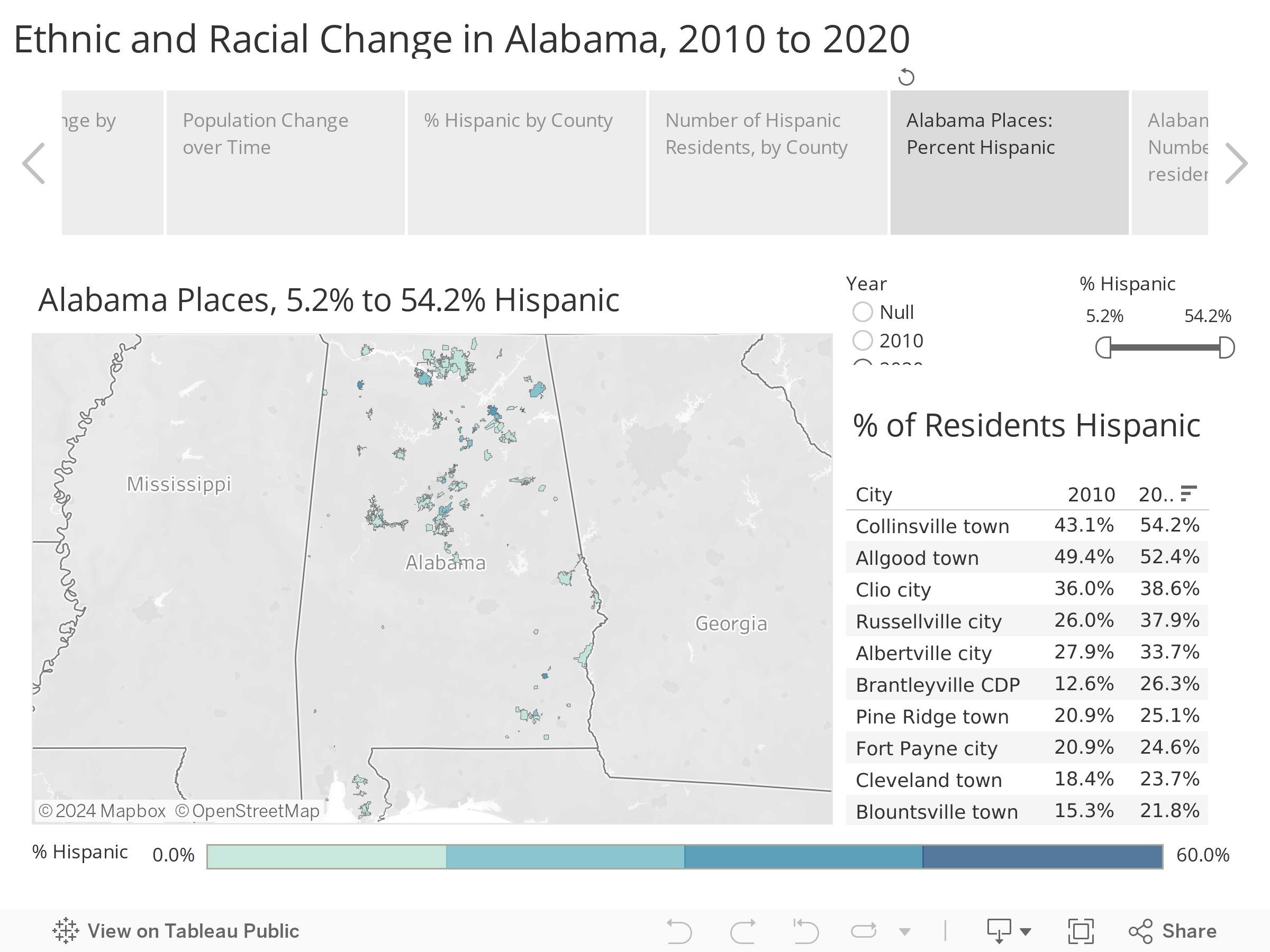
Parallel geographic concentrations of Hispanic individuals can be seen in the population of Alabama cities, towns, and places. Alabama now has two municipalities where a majority of the population is Hispanic: Allgood in Blount County and Collinsville in Dekalb, according to the 2020 Census.
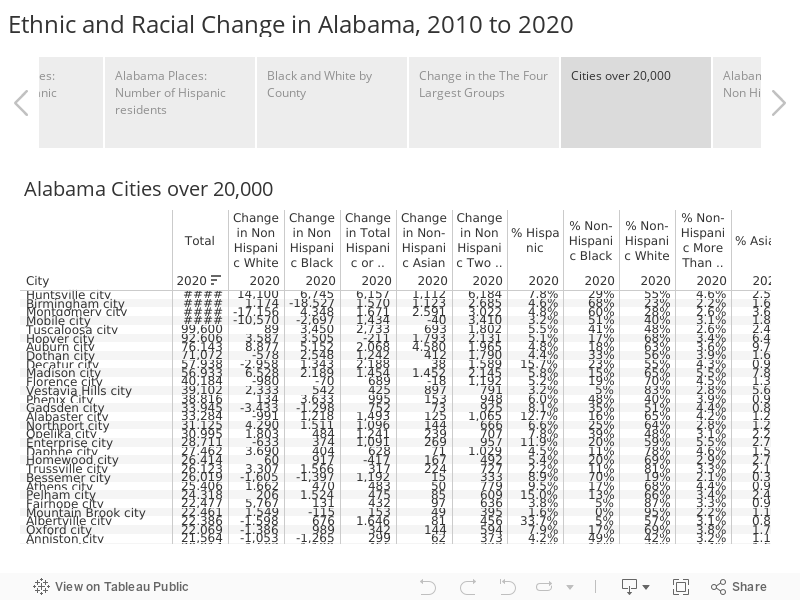
Among cities with a population of 20,000 or more, Albertville (population 22,386) has the highest Hispanic percentage of population, with the 7,545 Hispanics living there constituting 34% of the city’s population.
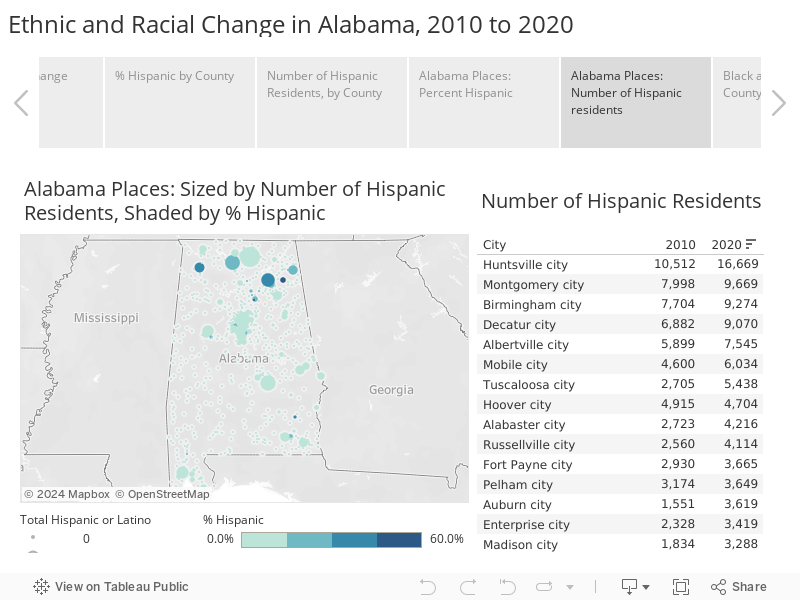
In terms of numbers of Hispanic inhabitants, the larger populations are found in the state’s big cities. Huntsville has more Hispanic residents, 16,669, than any other Alabama city, followed by Montgomery, Birmingham, and Decatur, each with over 9,000 Hispanic residents.
Near Birmingham, Hispanic communities along the Interstate 65 corridor in Hoover, Pelham, and Alabaster total over 10,000. Out of 597 Alabama cities, towns, and places, 450 saw either flat or increases in the Hispanic population. Among Alabama cities above 20,000 in population, only two, Hoover and Homewood, saw a decline in their Hispanic populations over the decade. Homewood was down by 417, Hoover by 211.
Black and White: Enduring Patterns and Subtle Changes
While the Hispanic, Asian, and multiracial populations are of interest because of their rate of change, the enduring story of Alabama is the population patterns of Black and White, a story stretching back to statehood.
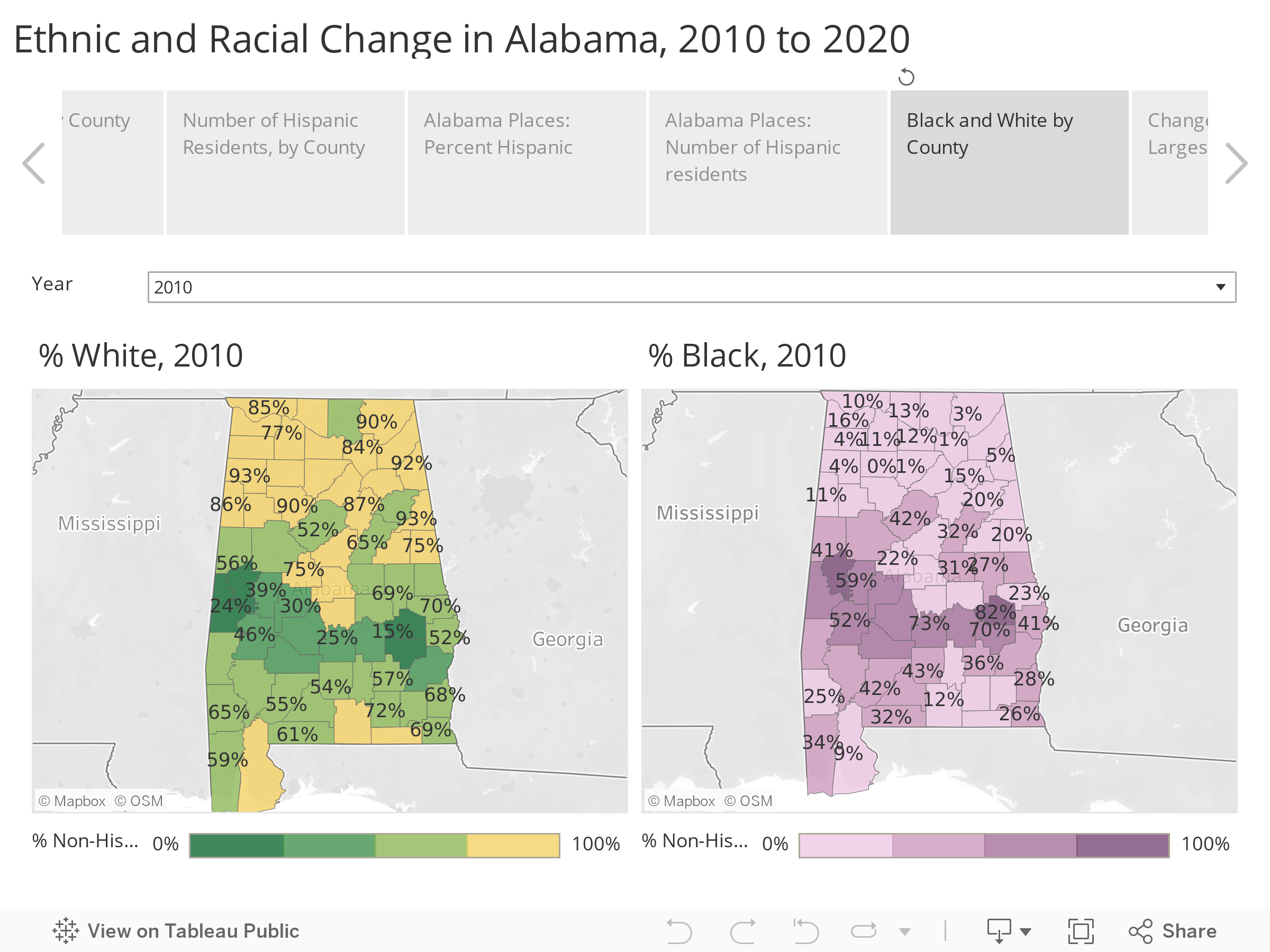
The general pattern remains in Alabama: 11 counties are majority black, the south central Alabama counties of the Black Belt, named for their rich soil, counties that historically had the highest concentration of cotton plantation agriculture and enslaved persons. Those black majorities persisted after emancipation and continue today.
Greene County has the highest percentage of non-Hispanic Black population, over 80%. The most populous majority black county is Montgomery County, with over 229,000 residents, 55% of whom are Black.
Meanwhile, Winston County, in rural northwest Alabama, has the highest percentage of Non-Hispanic White residents at 92%, with Cleburne (91%), Cherokee (90%), Cullman (89%), and Marion (89%) not far behind.
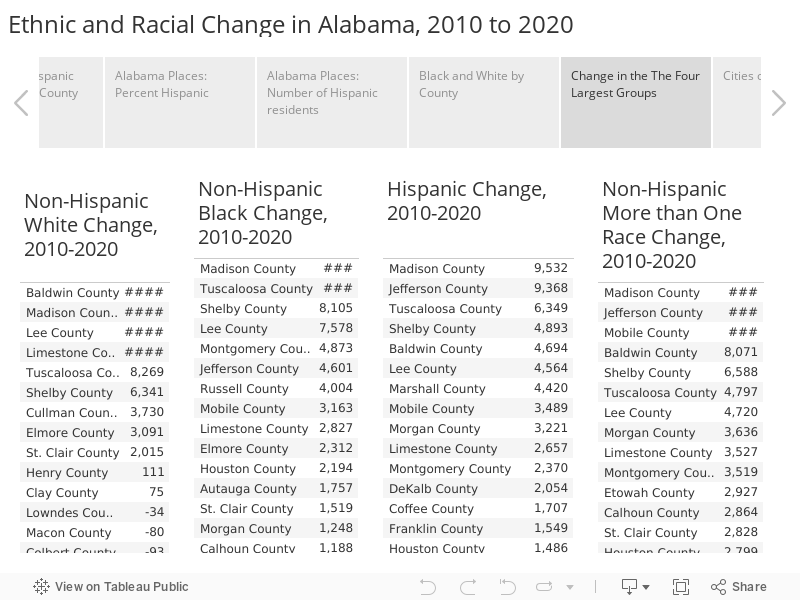
In 11 counties, the Non-Hispanic White population increased. Baldwin County saw the largest increase over the decade, with a gain of 34,000, followed by Madison, Lee, and Limestone. However, those counties all diversified as well. Blacks, Hispanics, and other groups also grew in numbers.
The counties with the most significant decline in the number of residents identifying as Non-Hispanic White were Mobile (-17,201), Jefferson (-15,961), and Montgomery (-14,745). Remember that some of that “decline” in the count may be attributed to individuals reclassifying themselves. However, those population changes in the white population correspond with overall population counts and flows that show continuing movement to suburbs located in adjacent counties.
In each of the central metro counties, the percentage of the population identifying as non-Hispanic White has declined as a share of the population as the Black, Hispanic, and other racial and multiracial subgroups increase. Non-Hispanic Whites represented 52% of Jefferson County’s population in 2010; by 2020, that percentage was 48%. Blacks make up 42% of the Jefferson County population in 2020, roughly the same percentage as in 2010. The Hispanic population grew by over 9,000, increasing from 4% to 5% of the population. The group with the biggest increase in Jefferson County was non-Hispanic More than One Race, up 12,921, constituting 3% of the population.
In Montgomery County, 38.4% of the population was non-Hispanic White in 2010; In 2020, 32%. The Black majority in Montgomery County increased from 55% to 57%. Hispanics increased by 2,370, now representing 2% of Montgomery County’s population, up from 1% in 2010. Asians 3,160, now 4% of the population, while the non-Hispanic More than One Race category increased by 3,519 and in 2020 representing 3% of the population.
In Mobile County, the non-Hispanic White population percentage went from 59% in 2010 to 55% in 2020. The Black population increased by 3,163, or 35% of the county population. The Hispanic community increased by 3,489, raising its share of the population to 3.2%. Like Jefferson County, Mobile County’s biggest growth category was in the non-Hispanic More than one race category, which gained over 10,000, making it the second most populous minority group at 3.7% of the population.
Meanwhile, Madison County’s non-Hispanic White population increased by 16,000, but its Black population grew by 16,052, non-Hispanic More than One Race population grew by 13,027, and its Hispanic population increased by 9,532. Despite the growth in the non-Hispanic White population, its population percentage decreased from 66% of the population in 2010 to 61% in 2020.
Just as whites have sought out new housing opportunities in the suburbs, Blacks make up an increasing percentage of the population in Shelby and St. Clair Counties around Birmingham and are also an increasing percentage of the population in Autauga and Elmore counties outside of Montgomery.
Meanwhile, the Black population is also decreasing in Alabama’s Black Belt,
Race in Alabama Cities, Towns, and Places
When looking at cities, some subtle shifts can be seen in the data. Birmingham, which saw decades of White flight, saw an increase in the White population but not enough to offset significant outflows of Blacks. Meanwhile, Montgomery and Mobile, which had maintained more racial balance for longer than Birmingham, saw outflows of White residents and growth in other demographic groups.
In Huntsville, populations increased across all racial and ethnic groups, though that multifaceted growth also produces a diversified population.
Birmingham
Between 2010 and 2020, Birmingham saw a modest gain in its non-Hispanic White population, with an additional 1,000 residents identifying as non-Hispanic White. Meanwhile, Birmingham’s Black population declined by almost 20,000. The city added about 1,500 Hispanic residents, and the number of individuals identifying as non-Hispanic More than One Race was up 2,685. The city saw a net decline of 11,504. Because of the shift, Hispanics and non-Hispanic Whites now represent a slightly higher percentage of Birmingham’s population. In contrast, the Black percentage of the population declined from 73% to 68%., with 23% White, 5% Hispanic, 2% More than one Race, and 2% Asian.
Montgomery
The situation was different in Montgomery. The City of Montgomery’s Black population grew by 4,348, but the White population declined by 17,000. The Hispanic population of Montgomery increased by 1,671. But the most growth came from an increase of 2,591 Asian residents and 3,022 in those reporting More Than One Race. In 2020, Montgomery’s population was 60% Black, up from 56% in 2010. Non-Hispanic Whites dropped from 36% of the population to 28%. Asians climbed to 4% of the population, just ahead of More than One Race at 3%.
Mobile
In the City of Mobile, the White population declined by 10,570, the Black population declined by 2,697, and the Hispanic population increased by 1,434. An additional 3,410 people in Mobile identify as More than one Race compared to 2010. The Black population now represents 51% of Mobile’s population, up from 50% in 2010. The White population represents 40%, down from 44% in 2010. Hispanic and individuals of More than One Race each make up 3% of the population, while Asians represent 2%.
Huntsville
Meanwhile, in Huntsville, each of the four largest groups grew: Hispanics (+6,157) and non-Hispanic Whites (+14,100), Blacks (+6,745), and non-Hispanic More than One Race (+6,184). The non-Hispanic White population decreased in its share of the population from 58% to 55%. The Black population share decreased from 31% to 29%, but the Hispanic share increased from 6% to 8%. Individuals of More than One Race increased to 4.6% of the population, while the Asian share of the population increased slightly to 2.5%.
Growth in the Asian Population
Though the Asian population in Alabama is smaller in comparison to other demographic groups, there has been notable growth in some areas.
The small fishing town of Bayou La Batre in south Mobile County is the Alabama city with the highest percentage of Asians in the population. The Vietnamese community there, established by people fleeing the aftermath of the Vietnam War, represents 20% of the city’s population. However, over the past decade, the number of Asian residents declined by 162.
Meanwhile, the Asian population has grown significantly in several communities and counties along the Interstate 85 corridor, home to Hyundai, Kia, and automotive suppliers with ties to South Korea. Auburn’s population is 10% Asian, after adding 4,580 Asian residents between 2010 and 2020. Montgomery’s Asian population increased 2,591, and neighboring Pike Road added 472 Asian residents.
The Asian population also increased in the Birmingham metro — Hoover (+1,793), Birmingham (+1,123), and Vestavia Hills ($897) — and in Huntsville (1,112) and Madison (+1,452).
Conclusion
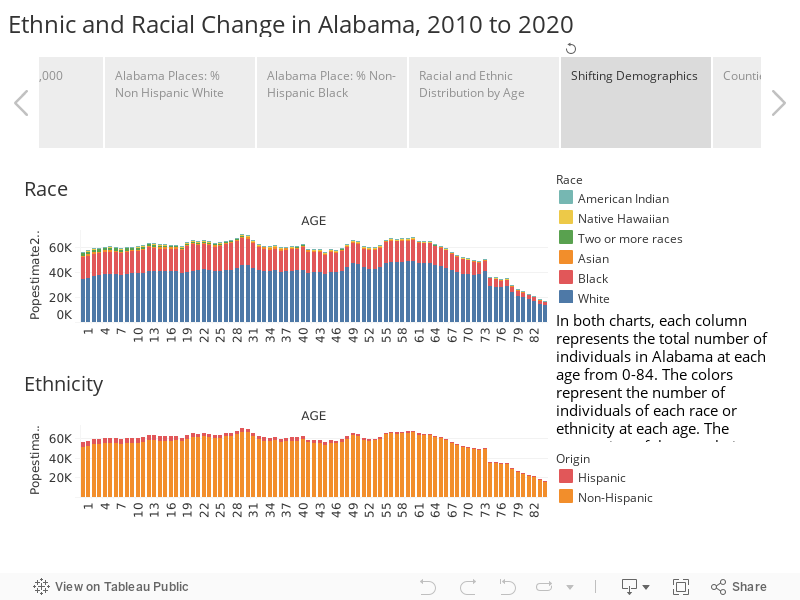
Alabama and the nation continue to diversify due to birth, death, and migration trends. But the statistics from the 2020 Census show that the nation is also changing through marriage and evolving attitudes toward racial identity as customs and generations change. The chart below looks at the Alabama population by age, with the population color-coded first for race and then for ethnicity. Both charts note the increasing racial and ethnic diversity in the younger population.
The shifting demographics challenge Alabama to continue progress toward common goals and increasing equality of opportunity for all.
State Test Results Showed Across the Broad Improvement; Gaps Widened Though
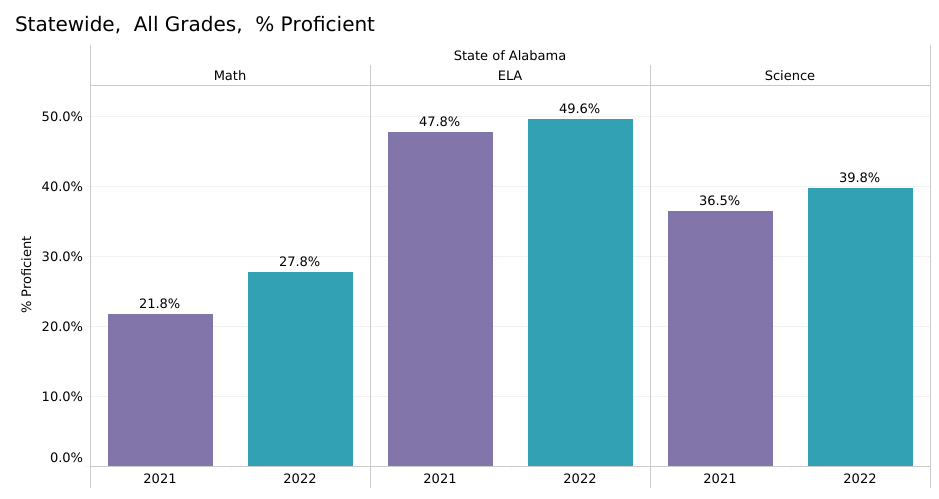
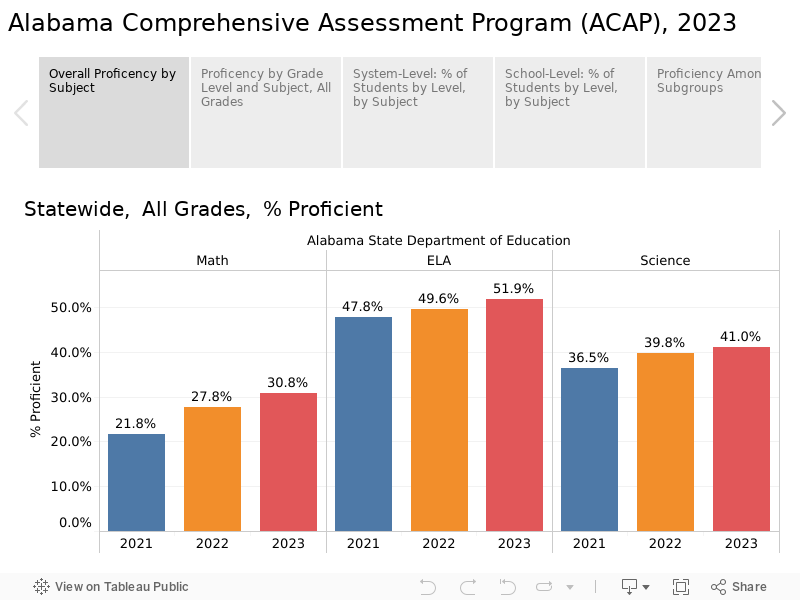
Alabama public school students showed increased proficiency in math, science, and English at all grade levels and across virtually all demographic groups in the 2021-2022 school year, according to the recently released results of the statewide standardized test, the Alabama Comprehensive Assessment Program (ACAP).
Figure 1. Proficiency By Subject (Grades 3-8), 2021 and 2022 compared
While the improvement is welcome, there is a long way to go.
Only half of students across the tested grades (3-8) scored proficient in English Language Arts (ELA). In math, only 28% of students were proficient. Students were tested in science in grades 4 and 8, and 40% of students were found to be proficient. A sub-set of the ELA questions is used to measure whether second and third-graders are “reading on grade level,” a different measure than proficiency. Those results, released by the state department this summer, showed that 22% of third-grade students were below grade level in reading.
This is the second year students have taken the ACAP as the statewide standardized test. Developed specifically for Alabama, ACAP is not taken by students in other states. Comparing ACAP scores to scores on previous assessments (ACT Aspire, Scantron), ACAP finds similar though slightly higher proficiency rates in ELA/Reading as previous statewide standardized tests found. The one national benchmark test, the NAEP, has historically graded tougher, with reading proficiency rates about half what other assessments show. In Math, ACAP seems to be the toughest measure of all, with scores in the range of but slightly lower than NAEP. Past statewide assessments have tended to grade student math proficiency more generously.
A Rebuilding Year
The 2021-2022 school year marked a return to closer-to-normal conditions compared to the 2020-2021 school year, which was marked by the disruptions from the Covid-19 pandemic. Improvements were seen not only across all subjects and all grades but across almost all school systems.
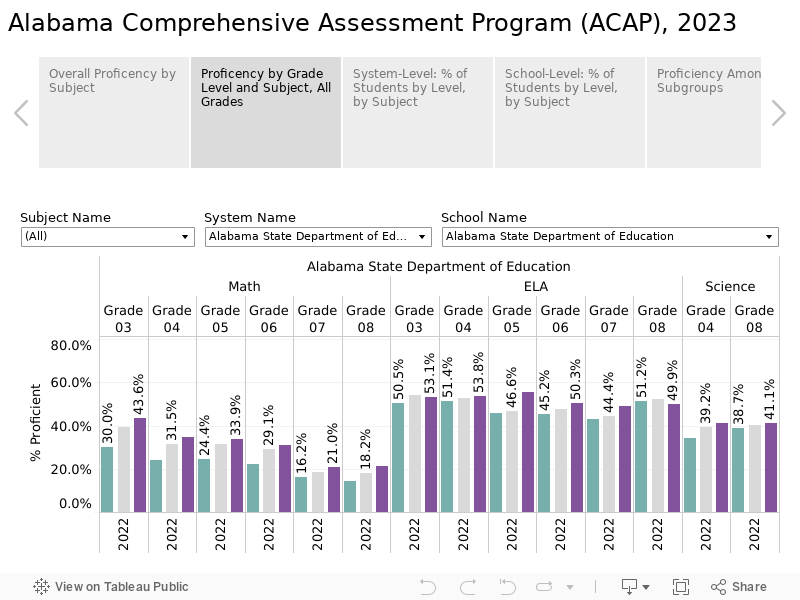
Looking at the results by subject and grade, improvements were strongest among the youngest students. The gains were highest in early grades mathematics, a welcome development considering Alabama students’ long-term poor performance in math. The math proficiency rate among third greater increased by 9 percentage points and by seven percentage points in grades 4-6. With urging and support from the Legislature, the Alabama Department of Education is putting additional emphasis on early grades mathematics. The early grade gains show promise. However, the percentage of students scoring proficient in math declines sharply in the upper-grade levels, as it has for years.
ELA scores are also highest in those early grades, with a drop after fourth grade, then a recovery in 8th. In response to the 2019 Alabama Literacy Act, schools and systems statewide have been providing an unprecedented level of professional development for reading instruction for teachers in Grades K-3. As one might expect, growth in ELA scores from 2021 to 2022 was highest in Grade 3.
Figure 2. Proficiency by Grade, 2021 & 2022 compared
Results by Subgroup
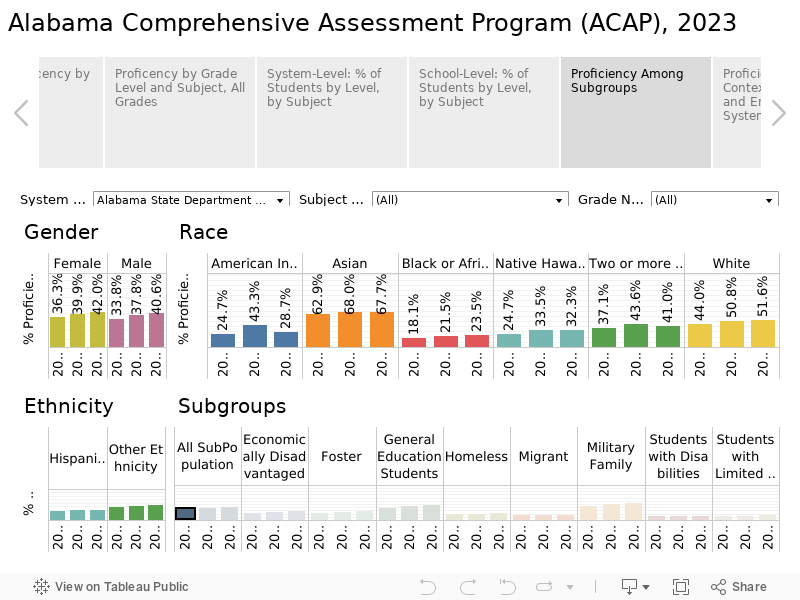
Most subgroups of students showed improvement, with the strongest gains being among White, More than One Race, and Asian students. While Black, Hispanic, and economically disadvantaged students all posted gains, the higher level of increase among White, More than One Race, and Asian students led to a widening of the score gap between the groups. Nationally and within the state, evidence indicates that systems serving economically-disadvantaged and minority students tended to be harder hit by the pandemic and were slower to return to normal functioning as conditions improved. That may play some part in explaining the disparity.
Figure 3. Proficiency by Subgroup, 2021 & 2022 compared
Proficiency in Context
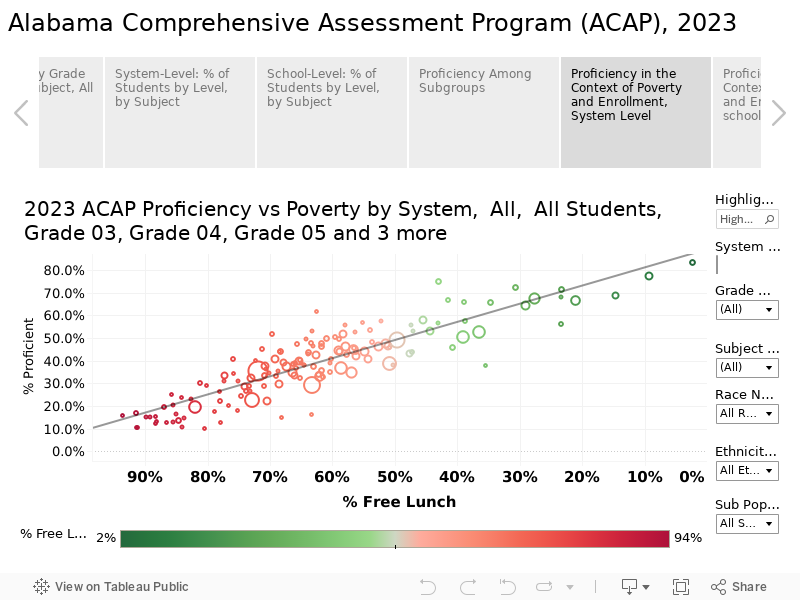
In general, systems with low rates of economic disadvantage tend to have a higher percentage of students scoring proficient. Schools and systems with higher concentrations of economic disadvantage tend to have lower rates of proficiency. This pattern is consistent nationally across most standardized tests. The economic disadvantage for a system or school is measured by the percentage of students who automatically qualify for a free lunch under the national school lunch program.
The chart below presents school systems according to both their rate of proficiency (the vertical axis) and their rate of economic disadvantage (the horizontal axis). Systems with higher rates of proficiency are higher above the baseline, while the systems to the left of the chart have high rates of economic disadvantage, with economic disadvantage decreasing as you move right. The line sloping up to the right represents the relationship between the two variables and predicts where the proficiency rate of a system at a given level of economic disadvantage. Thus, systems above the line of prediction are performing better than predicted given the level of poverty among students.
Piedmont City Schools, for instance, generated an overall proficiency rate of 60% despite having 54% of students qualifying for a free lunch. That compares to a 2022 state average proficiency across all grades and all subjects of 38% and an average economic disadvantage rate of 41%.
Figure 3. System Proficiency in the Context of Poverty, 2022
Using the same approach to present proficiency results for schools, the relationship between proficiency and economic disadvantage levels is still there, but it is not as determinative, with greater divergence from the line of prediction. That provides further evidence the efforts of educators and communities can make a difference.
Use the menus provided to explore the data or to highlight schools and systems of interest.
Figure 4. School Proficiency in the Context of Poverty, 2022
Beyond proficiency
Student scores on the ACAP fall into one of four levels. According to the scoring system, Level 4 students have an advanced understanding of grade-level standards. Students scoring on Level Three have a strong understanding of standards. Students on Level 2 have a partial but incomplete understanding of grade-level standards, while students scoring on Level 1 demonstrate minimal understanding of the material for the grade level.
Figure 5 presents the percentage of each system’s students that earned scores at each level. Two lines are presented for each system, allowing a comparison of the 2021 and 2022 results. Overall state results are at the top for comparison.
Figure 5. Percentage of students scoring at each level by system
Figure 6. presents the same information on student levels for individual schools. Menus allow the selection of systems. When comparing schools keep in mind the socio-economic mix of the students being served, as well as the school’s status as a magnet or charter school. Results for schools where students are selected or self-selected should be understood in that context. It is also important to remember that schools can change from year to year. Some schools may close or merge with other schools. New schools may open. Grade levels may be added or removed. Any such changes need to be considered before drawing conclusions about performance.
Figure 6. Percentage of Students scoring at each level by school
Large Performance Gains
In 2022, the system that showed the highest overall percentage point gain was Cullman City School, with an 11.6 percentage point gain in proficiency in all subjects combined.
Cullman’s gains were particularly strong in math. Jumps were seen in all grades ranging from a 14 percentage point gain in 8th grade to a nearly 27 percentage point gain in fourth grade.
Superintendent Kyle Kallhoff attributed the success to teachers, students, and parents. Cullman invested federal relief and recovery money in four math coaches across its five schools. Those coaches received intensive summer training from the state department of education’s Alabama Math Science and Technology Initiative (AMSTI). They continued to receive AMSTI support throughout the year.
With support from the coaches, teachers and students began engaging in number talks, a way of discussing math problems that encourage students to develop mathematical reasoning skills. Cullman teachers also recognized that the rigor of Alabama math standards required them to supplement their math instruction to ensure the standards were covered. to make sure that the math standards were covered.
Teachers paced lessons so that the match standards were covered by April, which allowed time for review and targeting of areas where students needed additional support.
Figure 7. Cullman City Math Proficiency Gains
Explore the data
PARCA provides its analysis and visualization of the ACAP data for the benefit of school leaders and teachers, for parents, and citizens at large. The tabs in the visualizations provide a variety of ways to evaluate relevant data. Use the “full screen” option at the bottom right of the visualizations to access a larger view of the data.
Comparative data is useful for understanding performance in the context of your community and the state. Comparisons over time and with similar schools can be useful in gauging your school’s progress and identifying areas where improvement is needed.
Alabama Population Dynamics and Workforce
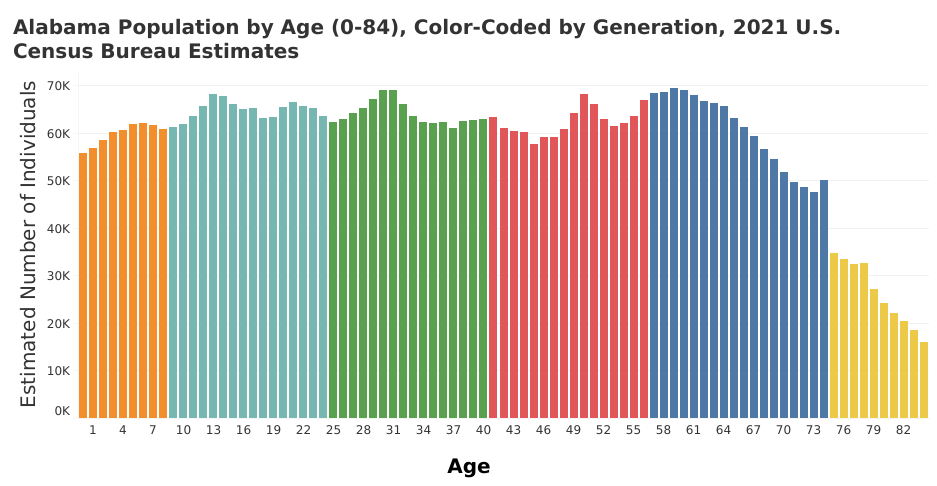
Absent immigration from other states or from abroad, Alabama’s working-age population is on track to shrink in coming years, according to a PARCA analysis of new population estimates from the U.S. Census Bureau.
(Not represented in the graphic are the more than 85,000 Alabamians the Census estimates included in the 85 and older category).
The 2021 Census population estimates by age provide a preview of the number of individuals that will join the workforce and the number that will likely be leaving it. Two factors are conspiring to create downward pressure on the working-age population:
Large numbers of aging Baby Boomers are likely leaving the workforce
The smaller rising generations, Gen Z and Gen A, will provide fewer replacements for those retiring workers.
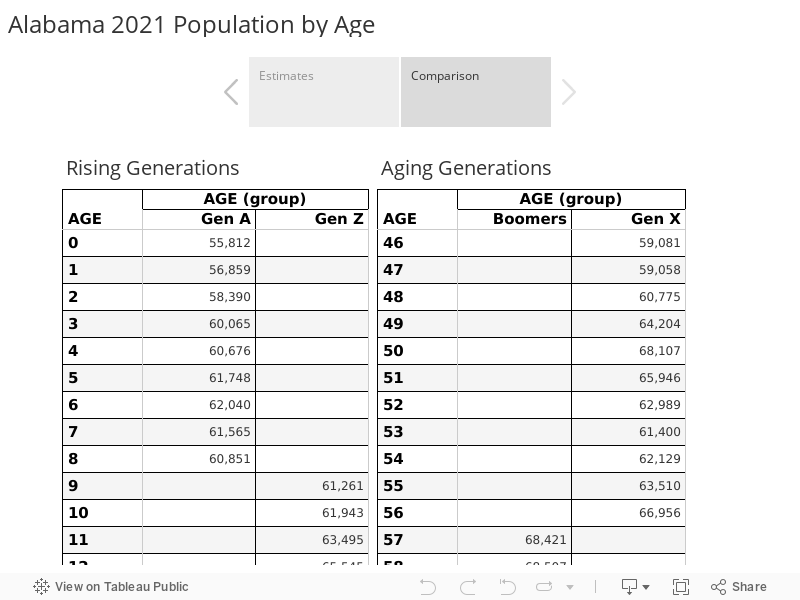
In 2021, the Census estimates there were 65,730 64-year-olds in Alabama vs. 63,125 18-year-olds, a difference of about 2,600.
In every successive year thereafter, the number of Boomers exceeds the corresponding Generation Z cohort.
The gap widens significantly when today’s 11 and 12 years reach the age of 18. In 2008, with the advent of the Great Recession, birth rates fell. And they haven’t recovered.
Even when the Baby Boom has moved out of the prime working years, the number of potential leavers will outnumber new entrants, based on the current age structure of the Alabama population.
Considering only the current population, over the next 18 years, Alabama’s population between the ages of 18 and 64 will drop by a cumulative total of more than 50,000.
However, current residents only make up part of the story. Population growth is also influenced by migration and birth and death rates. Labor force supply is also affected by migration, by labor force participation, and indirectly by educational and skills attainment.
In terms of the natural population increase, Alabama has already seen two successive years in which deaths exceeded births. In 2021, about 8,500 more people died than were born, according to the estimates. This is due to the larger number of people moving into old age and the elevated death rates associated with the Covid-19 pandemic.
In terms of migration, changing patterns are affecting population and labor supply. From 2010-2016, most of Alabama’s population growth came through international immigration, with the state annually adding about 10,000 new residents who had been born abroad.
Since 2018, international migration has dropped, but domestic migration has increased.
In recent years, Alabama has enjoyed a net positive inflow of residents from other states, about 20,000 new residents a year from that source.
With unemployment low and demand for workers high, Alabama may continue to attract new residents through migration. But at the same time, the state is trying to increase the quality and the quantity of Alabama’s homegrown labor force:
By improving the education and training of the rising generation so that they are equipped for 21st-century jobs
By bringing Alabamians who’ve fallen out of the workforce back in
An array of state initiatives are underway to improve student preparation:
the expansion of First Class Pre-K
the Alabama Literacy Act
the expansion of Advanced Placement classes, high school/college dual enrollment, and the expansion of career technical education.
On the labor force participation front, through the Success Plus Initiative, the Alabama Workforce Council, the Governor’s Office, and an array of state agencies and participating nonprofits are collaborating on strategies to bring more people into the workforce training and education systems. The initiative seeks to address barriers individuals face to participating in the workforce and training. Through cooperation and outreach, the partners hope to reach discouraged workers and provide them pathways to high-demand fields.
Progress Made But Over 20% of Alabama 3rd Graders Not Reading on Grade Level
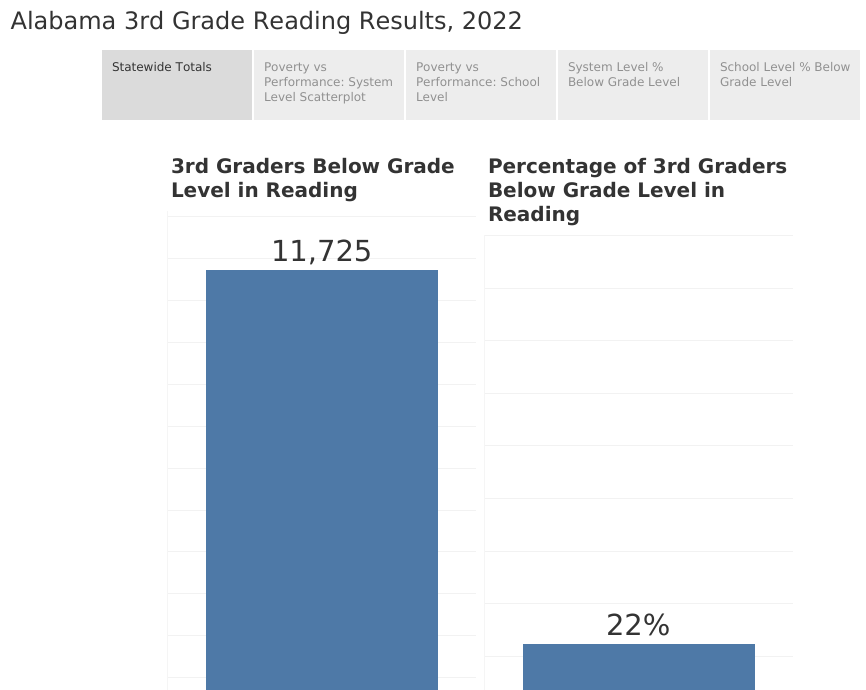
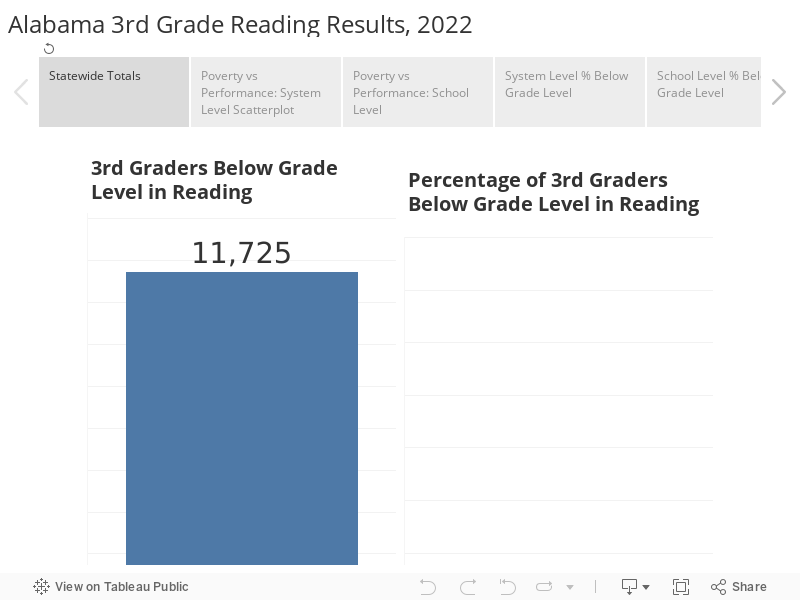
Fewer third graders scored below grade level in reading in 2022 compared to the previous year, according to results released by the Alabama Department of Education. Still, 22% or 11,725 students statewide failed to meet that critical educational milestone.
The Alabama Literacy Act, passed in 2019, has sharpened the focus on early grades reading and directed coaching support and additional resources to support reading instruction based on the science of reading. The law now requires all schools to assess all students in reading from kindergarten through third grade. If a K-3 student is identified with a reading deficiency, the law requires the child’s parent or guardian to be notified of the deficiency within 15 days. The school is required to develop and implement an intervention plan for the student within 30 days. Identified students are to receive intensive support from specialists trained in the science of reading during school, before or after school, and over the summer until that student’s deficits are addressed.
“Each K-3 student who exhibits a reading deficiency or the characteristics of dyslexia,” the law reads, “shall be provided an appropriate reading intervention program to address his or her specific deficiencies. Additionally, students shall be evaluated after every grading period and, if a student is determined to have a reading deficiency, the school shall provide the student with additional tutorial support.”
“Each identified student,” the Act continues, “shall receive intensive reading intervention until the student no longer has a deficiency in reading.”
The 2022 results represent a slight improvement over 2021, when 23% of students scored below grade level on the reading portion of the Alabama Comprehensive Assessment Program (ACAP), the statewide standardized test administered to students each spring.
The Literacy Act will eventually require that, to be promoted to fourth grade, students must demonstrate that they can read at grade level (some exceptions apply). That provision of the Act was delayed by the Alabama Legislature in light of the Covid-19 pandemic. The children entering third grade this fall will not face the retention requirement. However, the rest of the law is in force. Schools and systems must identify and provide intervention services to children in grades K-3, including summer learning camps. All parents of second and third graders who scored below grade level on the reading portion of the ACAP should have been notified and should enter school this fall with a plan for remediation in place.
The percentage of students scoring below grade level in reading varied widely across the state. In general, systems with the highest levels of economically disadvantaged children also had the highest percentage of students not reading at grade level. The interactive chart below presents Alabama school systems arrayed on a scatter plot.
The vertical axis represents reading performance, with the best performers high on the chart (a high percentage of students reading at or above grade level and a low percentage of students below grade level).
The systems are arrayed on the horizontal axis moving from left to right, from the highest level of economic disadvantage to the lowest, from left to right. The size of a school system’s circle reflects the number of third graders scoring below grade in reading. The circle’s color corresponds with the level of economic disadvantage in the student body, from dark red representing high levels of poverty to dark green indicating low levels of poverty. In general, systems with rates of higher economic disadvantage had lower performance: a higher percentage of students failing to read at grade level. Systems with a lower rate of economic disadvantage had fewer students failing to meet the threshold.
However, particularly at the school level, it is clear that economic disadvantage is by no means an insurmountable obstacle. The correlation between poverty and performance is not as strong as in other educational data, like the ACT. In these third-grade reading results, schools with the same level of economic disadvantage show very different levels of success. Many high-poverty schools far outscored expectations.
In 2022, in more than 50 schools across the state, 50% or more of students ended third grade without the reading skills needed to succeed. Even at schools with a low percentage of students reading below grade level, the needs of the children with reading struggles must be met with “an appropriate reading intervention program to address his or her specific deficiencies,” as the law requires.
The Alabama act is patterned after similar laws in Florida and Mississippi, both of which saw significant performance gains after instituting their literacy laws. Alabama, which had enjoyed previous success in reading instruction in the 2000s through the Alabama Reading Initiative, has reinvested in reading coaches and professional development based on the science of reading for teachers and principals.
The following charts allow you to make comparisons of systems or schools, using the menus at the top of the chart to select the systems you want to focus on. First, a listing of systems:
Then, the percentage of third graders reading below grade level by school. The bars are shaded to reflect the percentage of students from economically disadvantaged households.
Even though the retention requirement of the Literacy Act has been delayed, the law is in force. But even if there were no law regarding third-grade reading levels, early grades reading should be a top priority.
Parents, teachers, and school and community leaders must respond to the identified need.
The results are better than might be expected, considering the circumstances of the past three years. However, sustained effort will be required across multiple fronts to make competitive progress on educational attainment and labor force participation.
The Alabama Workforce Council and Gov. Kay Ivey launched the Success Plus initiative in 2018 amidst a national push to raise education and skill levels. Increasingly, a credential or degree beyond high school is considered essential to thrive in the modern economy. Higher levels of educational attainment for individuals and for the state are linked to higher pay, lower unemployment, and better health outcomes. Alabama trails other states in educational attainment and associated measures like labor force participation.
Between 2018-2021, Alabama produced 214,725 newly credentialed individuals between the ages of 16-64, according to estimates developed by the Center for Regional Economic Competitiveness, the Washington, D.C.-based nonprofit hired to analyze the state’s performance.
That includes associate’s and bachelor’s degrees earned at colleges, industry-recognized credentials in high schools, occupational licenses, and completed certification programs and apprenticeships in the adult population as well.
Refining the Goal
Like any thoughtful goal-setting exercise, Success Plus has refined its measures and goals. The original focus on the adult population (ages 25-64) has been broadened to include credential earners 16-24, recognizing that age group as the supply line for the future workforce and those most active in credential-earning.
Leaders of the initiative are also opting to focus on the numerical goal of 500,000 individuals rather than achieving a 60% rate of postsecondary credential attainment. A rate is more abstract and harder to measure. Beyond that, reaching the national average rate for educational attainment and labor force participation are important long-term goals but aren’t realistically attainable by 2025.
Refining the Count
To generate the counts and estimates, CREC worked across several information sources. Those estimates have limitations since they are based at least in part on aggregated data:
The data include reports from private for-profit and nonprofit schools and training agencies, some of which operate online distance education. Thus, some of the credentials reported by institutions with an Alabama presence may be earned by someone who lives elsewhere and won’t become part of the Alabama workforce.
The estimates can’t control for the quality of the credential earned.
Out-of-state students at Alabama public colleges earned about 40,000 of the 180,000 certificates and degrees included in the tally. Currently, only a small percentage of those students stay in Alabama.
Fortunately, a more precise count will eventually be available. The Success Plus initiative has spurred Alabama to build a privacy-protected system for tracking education, degree and credential attainment, and entry into the workforce, something most other states have already done.
That system is still developing, but its construction has already encouraged better data collection, standardization, and sharing across state agencies. That’s long been a need to generate timely insights on labor force and education supply and demand.
Success Plus is also building tools to sharpen the focus on quality credentials by building more direct routes through education to employment. The initiative brings together employers, educators, and outside experts to identify jobs that are in demand and the education and training needed to compete for those jobs successfully. As those pathways from education to employment become more clear, students should be able to plot a more efficient course to the career they want. And employers will be able to more efficiently identify individuals with the qualifications needed for positions.
Success Plus has identified those out-of-state students as an opportunity as well. A 2020 study by the Alabama Commission on Higher Education found that only 14% of bachelor’s degree earners who came from out-of-state were employed in Alabama five years after graduating. Alabama natives graduate and leave the state as well. The same study found that 62% of in-state bachelor’s earners remained in the state five years after graduation. Success Plus has energized efforts to retain those graduates as residents and workers.
Building momentum
Halfway to 2025, the number of career technical education credentials earned in high schools has risen, as has high school/college dual enrollment.
Another notable development spurred on by the Success Plus Initiative was the founding of the Alabama Office of Apprenticeship (AOA). In an apprenticeship, a new employee is paid while training and working for an employer or a profession. Apprenticeships often involve cooperation between an employer, a training provider, and the state, which encourages and helps subsidize paid training programs. Established in Sept. 2019, the AOA currently works with 427 employers, supporting 2,797 apprentices across the state.
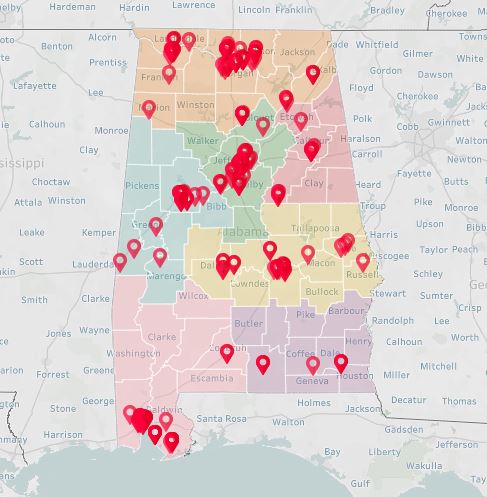
Interactive Map of Apprenticeship Programs in Alabama
Needs Attention
The college-going rate for high school graduates has declined for several years and dropped sharply during the pandemic. Part of the reason for the long-term drop is the rise in the high school graduation rate, which had hovered in the 70s but now tops 90%. The numbers suggest that additional students are graduating from high school but lack the academic qualifications for college. It becomes all the more critical for those students to leave high school with a career-related credential or a pathway into training or employment.
Another factor in the drop was the pandemic, which hit two-year colleges particularly hard. Current enrollment suggests a rebound at those schools. The students who delayed starting college during the pandemic represent a target pool of prospects for recruitment to training or education programs.
For those that didn’t finish high school or have left the workforce, there are education and training programs available, but they are underutilized. Nick Moore, who heads the Governor’s Office of Education and Workforce Training, pointed out that Alabama received almost $50 million in Workforce Innovation and Opportunity Act (WIOA) funding in 2020 but only reached 8,000 participants. Less than half of those participants earned a credential through the program, and even fewer ended up in employment related to the training.
If Alabama is going to reach its attainment goals, agency partners will need to recruit more individuals into training that leads to in-demand jobs. Government agencies and nonprofit partners will need to collaborate around participating individuals. Partners can increase success rates by identifying and removing barriers that prevent participants from successfully rejoining the workforce.
Conclusion
Assuming sustained and sincere commitment, Success Plus could mark a turning point for Alabama by:
Bringing together a powerful array of interests and actors around a central goal, one that can only be achieved through action on multiple fronts.
Committing the state to systematically gathering, reporting on, and acting on data to determine what’s working and where there are problems in the education and workforce pipeline.
Prioritizing those who historically have been left behind: special populations that face barriers to educational attainment and participation in the workforce.
PARCA, in partnership with the Business Education Alliance and A+ Education Partnership, has tracked the progress of Success Plus since the initial goal was announced. The most recent report in the series, Forging Alabama’s Future, describes Success Plus and related initiatives and goals set by various partners.
Alabama Public Opinion Survey 2022
With elections for governor and legislature pending in the fall, Alabamians are united in support for public investment in education and healthcare, divided on how to raise money for new investments, and express a preference for local leadership and decision-making. That is according to PARCA’s annual public opinion survey.
The poll of over 400 Alabama residents was conducted by Dr. Randolph Horn, Samford University, Assistant Vice President for Enrollment Research and Professor of Political Science.
Results from this year’s survey are consistent with previous years’ results in some important ways.
Alabamians continue to rank education as the most important state government activity.
Large majorities of Alabamians say the state spends too little on education and healthcare.
Alabamians have an aversion to taxes but say upper-income residents pay too little.
A slim majority say budget surpluses should be reinvested in state services, specifically education, rather than used to cut taxes.
If budget surpluses are used to cut taxes, the most popular tax cut is the sales tax on groceries.
Alabamians are willing to pay more taxes to support education but do not agree on which taxes should be increased.
Alabamians are essentially split on tax-funded vouchers to pay for private school tuition. However, a majority believe vouchers, if allowed, should be available to all students.
Alabamians continue to believe that they have no say in state government and that government officials in Montgomery do not care about their opinions.
Results of the survey indicate many opportunities for officials to demonstrate responsiveness to public concerns and leadership in crafting public policy solutions.
Graduation and College and Career Readiness Rates Steady, Gap Persists
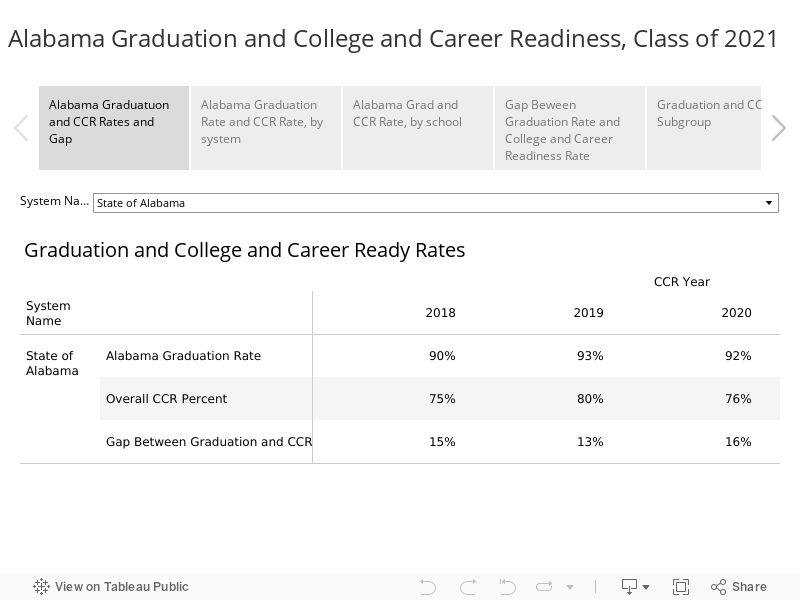
With graduation season now upon us, new data allows us to look back at statistics for last May’s public high school graduates, Alabama’s Class of 2021.
In 2021, 92% of seniors graduated on-time four years after starting in 9th grade, maintaining the high rates Alabama public schools have posted in recent years. However, only 76% of seniors were certified as college and career-ready (CCR), a gap that state leaders are calling on schools to close.
Percentage Change in the College and Career Readiness Measures
The results of 2021 should be considered in the context of the Covid-19 Pandemic. This graduating class saw in-person instruction end in March of their junior year. For their senior year, the 2020-2021 school year, the amount of time students spent in-person at school varied by district. While the graduation rate remains close to its historical high point, the college and career readiness rate remains below the level it reached in 2019. That’s not necessarily a bad thing. Measures of college and career readiness must be honest and meaningful measures. There are seven ways a student can demonstrate college and career readiness.
1. Earn Credit Through a College: a higher percentage of students earned college credit while in high school in 2021: 17%. That’s the highest percentage ever, up from 15% in 2020. These courses, also known as dual enrollment, tend to be taken through a local community college but can also be through a university. The student must successfully complete the course and earn credit to qualify as CCR.
2. Earn a Qualifying Score through Advanced Placement: AP courses are taught in a high school but have the rigor and approach of college courses. In 2021, 12% of students qualified as CCR through AP, which is tied for the highest percentage ever. To count as CCR, a student has to score three or higher (out of 5) on the national end-of-course test, a level at which a college might award college credit.
3. Earn an Industry Recognized Credential through Career Technical Education: 36% of students earned an industry-recognized credential through career technical education in 2021. These credentials result from taking work-oriented courses offered at high schools or K-12 career tech centers. At 36%, the Class of 2021 was only slightly behind the 37% of students recorded for the Class of 2019. After a rapid jump in CCR attainment in recent years, there has been an increased focus on the quality of the industry credentials that count toward career readiness. The credential has to be tied to a student’s course of study. Also, the credential should be valued in a career field that is in demand in the regional job market. This screening for the quality of the credential may hold down growth in numbers in the short term, but it should improve value for the student and the economy.
4. Earn a benchmark score in a subject test on the ACT: The percentage of students scoring at or above the college-ready benchmark on the ACT was down by 5% in 2021, to 45%. A student scoring above the benchmark has a 50% chance of earning a B or above and a 75% chance of making a C or above in that course in college. Covid disruptions may have had some bearing on students’ ability to prepare for and take the ACT, which tests readiness for success in college.
5. Earn a qualifying score on WorkKeys: Over the past two years, there has been a significant drop in the number and percentage of students earning CCR through ACT’s WorkKeys test, a standardized test designed to measure whether students have the math and communication skills expected in workplaces. WorkKeys is no longer required, and, in many systems, students who have already demonstrated college and career readiness by another means opt-out. (More on WorkKeys results below)
A lower percentage of students gained admission to the military or earned college credit through an International Baccalaureate course, options six and seven, in 2021 than in previous years.
Numerical Change
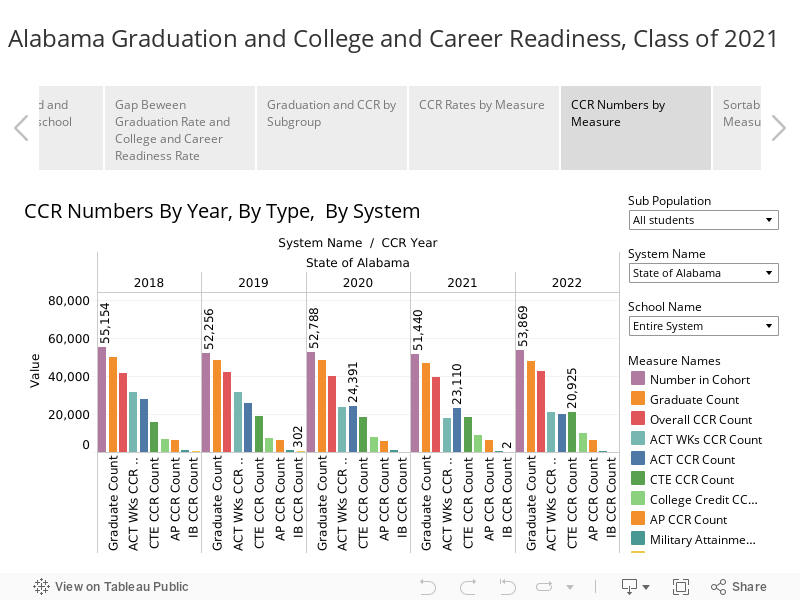
While the graduation and CCR rates are stable, fewer students are progressing through Alabama public schools. The rising generation, Generation Z, is smaller than the previous generation, The Millenials. Consequently, the number of college and career-ready high school graduates is declining. Despite little or no change in the graduation or CCR rate, 1,336 fewer students graduated from Alabama public schools and 646 fewer students graduated ready for college and career. In light of the ongoing elevated demand for skilled workers, Alabama must focus on graduating every student with the skills needed to succeed in higher education and/or the workplace.
School and System Results
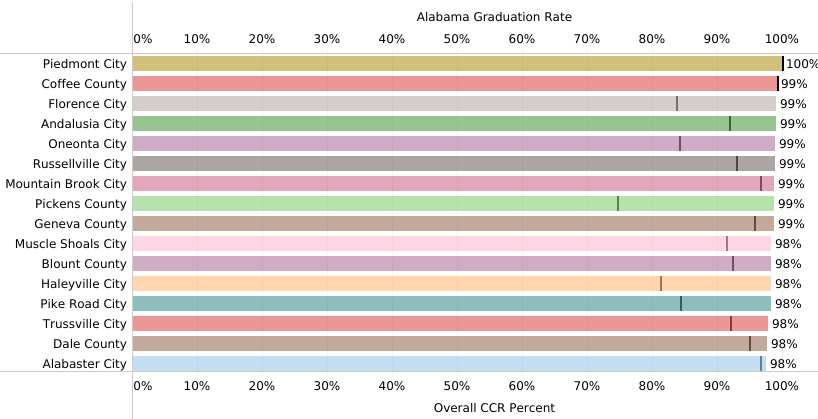
One system, Piedmont, and two dozen high schools reported a 100% on-time graduation rate for the Class of 2021. Eight high schools reported both 100% graduation and 100% CCR rate. In some schools, a higher percentage of seniors demonstrated college and career readiness than graduated.
On the other hand, nine schools had graduation rates below 75%. Thirty high schools had CCR rates below 50%. Twenty-six school systems had a gap greater than 25% between their graduation rate and the college and career readiness rate. In those systems, more than a quarter of students receiving diplomas hadn’t demonstrated their readiness for college or work, despite having met Alabama’s requirements for obtaining a high school diploma.
In the visualizations below, school systems and schools can be sorted by either graduation rate or college and career readiness rate. The solid colored horizontal bar represents the graduation rate; the short vertical bar represents the CCR rate. Through the tabs above the visualization, other data is accessible, including a graph of the gap between the graduation and CCR rate by system.
The same set of sortable data is available by school. In order to protect student privacy, results for small subpopulations of students are not presented.
Gaps Between Subgroups
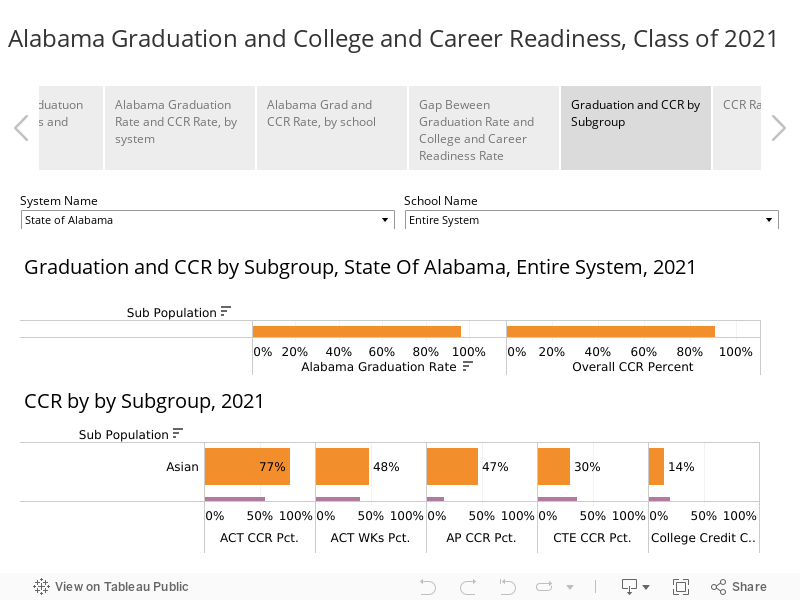
Historically, there have been gaps in the high school graduation rate between students of different races. In recent years, those gaps have been largely eliminated. However, the gaps persist in college and career readiness rates. Black and Hispanic CCR rates trail those of whites and Asians. CCR rates for economically disadvantaged students are well-behind those of non-economically disadvantaged students. Examining the subcomponents of CCR, the gap is widest on the ACT, with only 24% of Blacks and 30% of Hispanics benchmarking in a subject on the ACT, compared to 55% of whites. Asians are much further ahead, with 77% of Asian students earning a benchmark score. By contrast, there is almost no racial gap in college and career readiness rates in career technical education: 35% of Black students earned an industry-recognized credential through CTE compared to 36% of whites and 38% of Hispanics.
WorkKeys
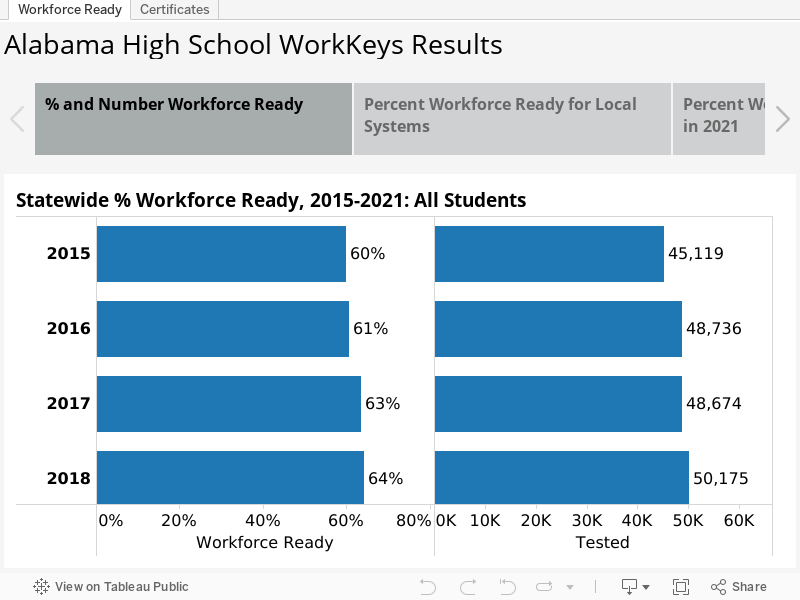
While still valued by many school systems, students, and employers, ACT’s WorkKeys test is no longer a universal comparative tool. After 2018, the Alabama Department of Education stopped requiring the test to be given to all students. That has led to significant drops in the number and percentage of students taking WorkKeys. In 2018, over 50,000 students took the test; in 2021, fewer than 35,000.
WorkKeys tests math, reading, and graphical literacy skills as they are employed in the workplace, in contrast to ACT, which tests for knowledge and skills needed in a college classroom. Businesses who build WorkKeys into their hiring practices know what a WorkKeys score means. They have determined what level of proficiency, as measured by WorkKeys, is needed in particular jobs. Students earn either a platinum, gold, silver, or bronze National Career Readiness Certificate, depending on their test performance. A student scoring Silver or above is considered college and career ready. In a normal job market, employers, particularly industrial employers, use WorkKeys in the applicant screening process.
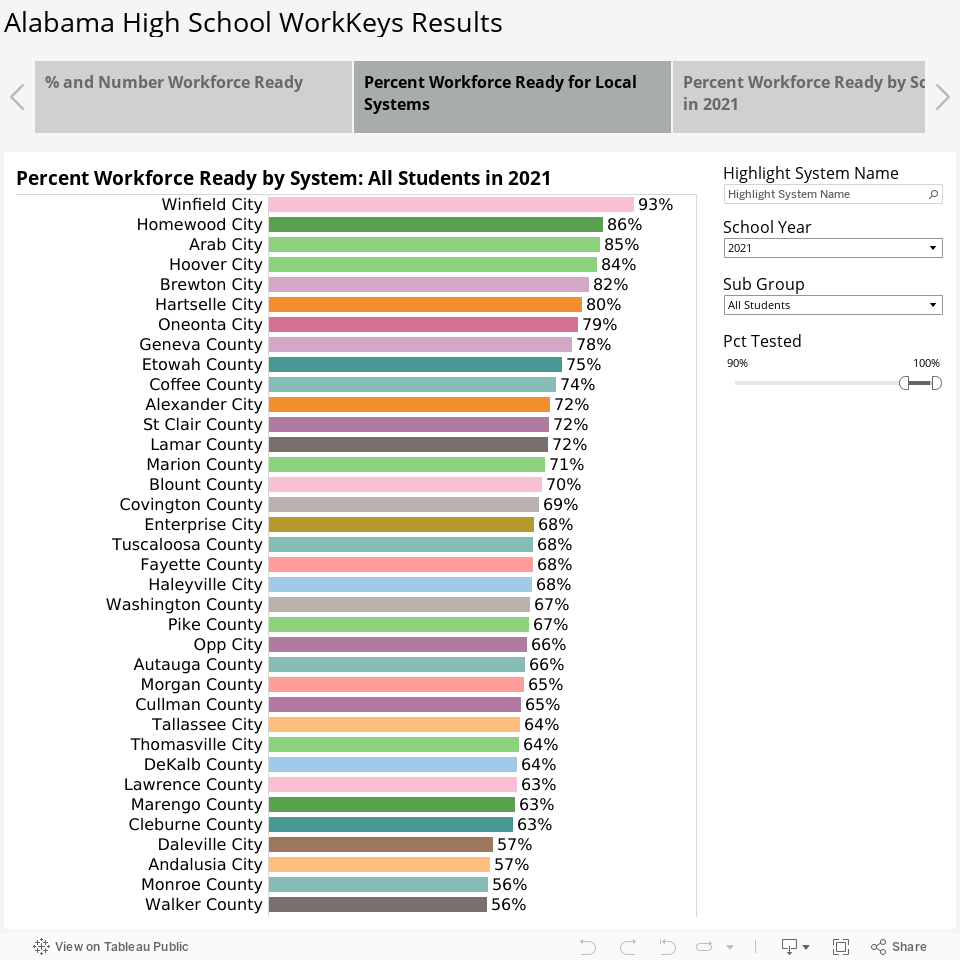
In 2021, 59% of Alabama high school students who took WorkKeys scored Silver or above, indicating they had the foundational math and communication skills needed in most workplaces. That’s down from 66% when all students were required to take the test. Many school systems now make WorkKeys available to students who haven’t qualified as CCR on another measure.
The visualizations that follow present WorkKeys results statewide and in systems where more than 90% of seniors took the test. The percentage of students scoring Workforce ready are those that score Silver or above.
The visualization below presents the results in a more detailed fashion. Each color represents the percentage of tested students scoring at each level: platinum, gold, silver, bronze, and no certificate earned.
ACT Scores Down Only a Fraction For the Class of 2021, Despite Pandemic
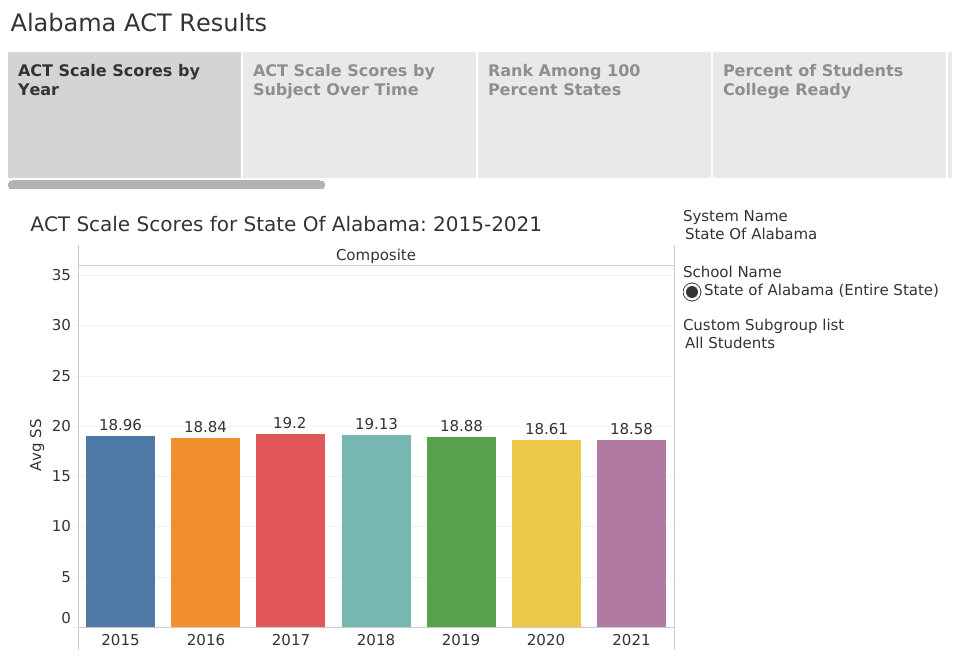
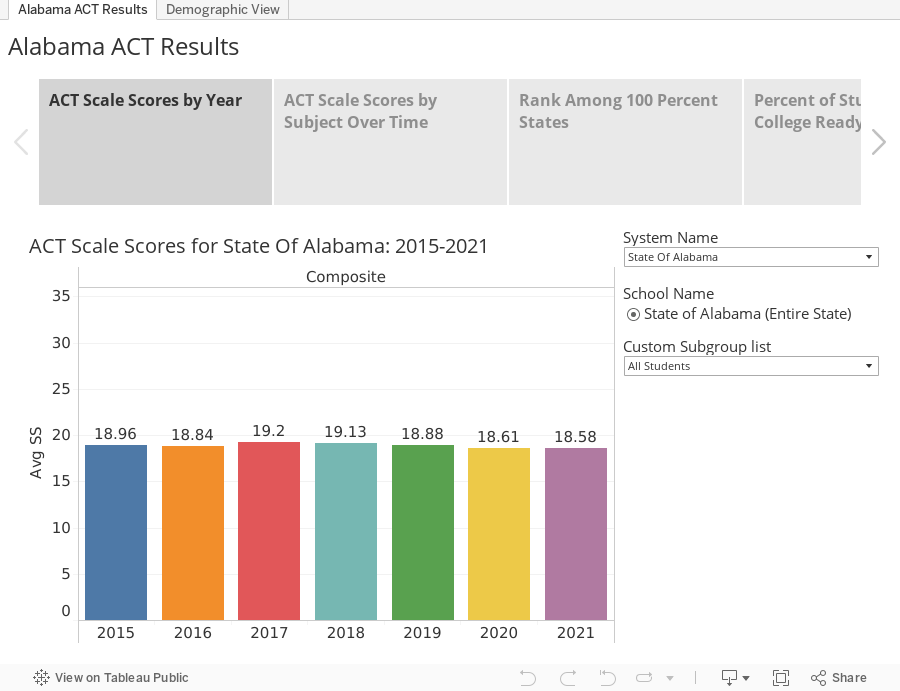
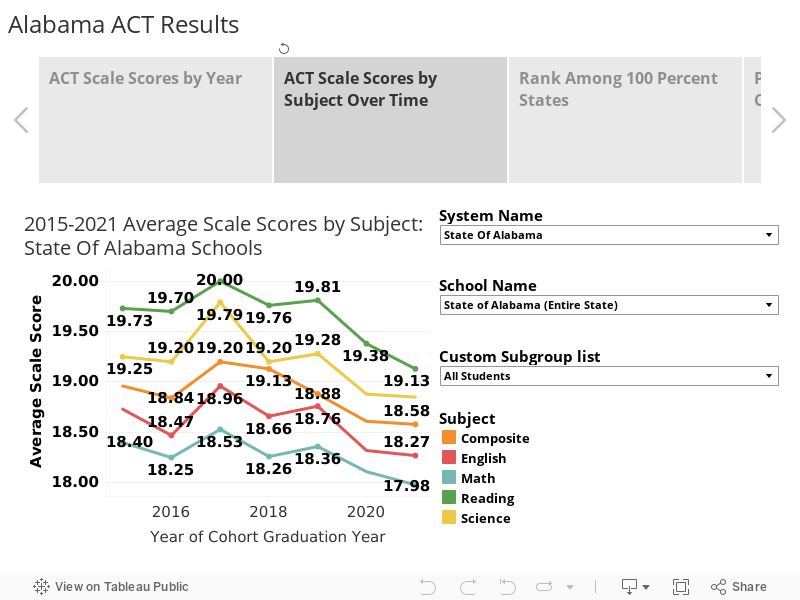
The average ACT score for students graduating from Alabama’s public high schools in 2021 was down only slightly, while the national average score fell more steeply, a fact that could be considered a victory in the light of the challenges faced by students and educators during the pandemic. Still, Alabama’s 2021 ACT results continue a downward drift from their peak in 2017.
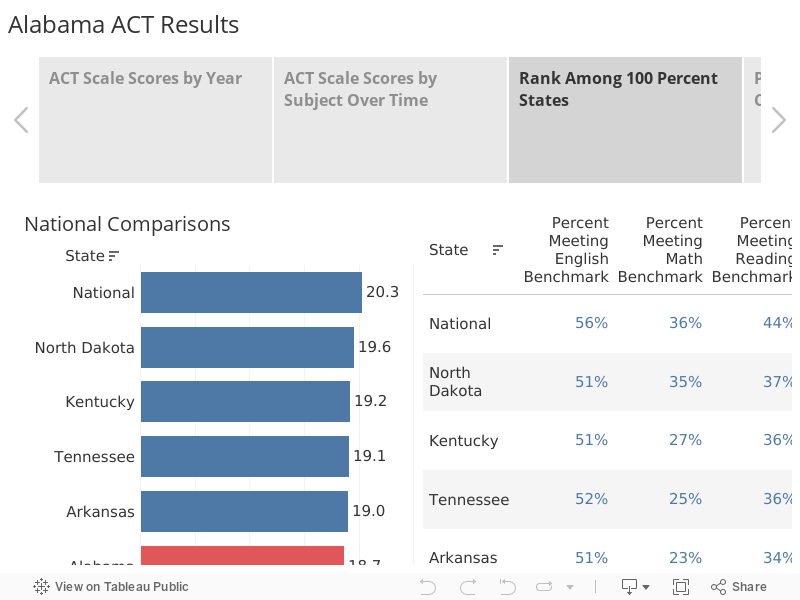
Alabama’s average score, 18.6 on a 36-point scale, shouldn’t be directly compared to the national average score. Alabama tests virtually all its public high school students, while only 35% of students take the ACT nationally. In states where the test is not universally given, only students planning to go to college take the test, which tends to push up the score. The national average score fell from 20.6 in 2020 to 20.3 in 2021. Among states that tested 100% of students, Alabama maintained its relative performance rank, behind Kentucky, Tennessee, and Arkansas but ahead of Mississippi and Louisiana.
Downward pressure on scores was expected. The pandemic led to the cancellation of several administrations of the ACT. Schools across the country operated virtually during the spring of 2020 when the students in the class of 2021 were juniors. Altered forms of schooling persisted into the fall of 2020. In normal circumstances, some students take the test more than once, attempting to boost their scores. That happened less with the Class of 2021. According to ACT, only 32% of students took the ACT more than once compared to 41% of the 2020 cohort. That drop was likely because most universities suspended the requirement of taking the ACT due to the disruptions.
In addition to the fractional drop in the average scale score for Alabama students, the percentage of students scoring college-ready in all subjects declined. In 2021, only 15% of students scored at or above the college-ready benchmark in all four tested subjects, compared to 16.3% in 2020 and 18% in 2017. According to ACT, students who meet a benchmark on the ACT have approximately a 50% chance of earning a B or better and approximately a 75% chance of making a C or better in a corresponding college course. ACT is primarily geared toward measuring readiness at four-year colleges and universities.
On each of the four subjects that ACT tests — English, math, reading, and science — student scores ticked down a fraction.
Some points of interest arise when delving more deeply into the numbers. Scores for white students declined in every subject while Black students held steady in reading and science. Hispanic students posted an improvement in English and science. Scores rose for both economically distressed and non-economically distressed students, an unexpected result considering that scores overall were down slightly. That may be explained by more students being classified as economically distressed due to the lingering economic consequences of the pandemic. Some students who had typically been in the non-economically distressed category likely shifted into the economically distressed pool, which can push up the scores of the economically distressed pool.
The stubborn score gaps between economic and demographic subpopulations persisted in 2021. Asians outperformed all other subgroups.
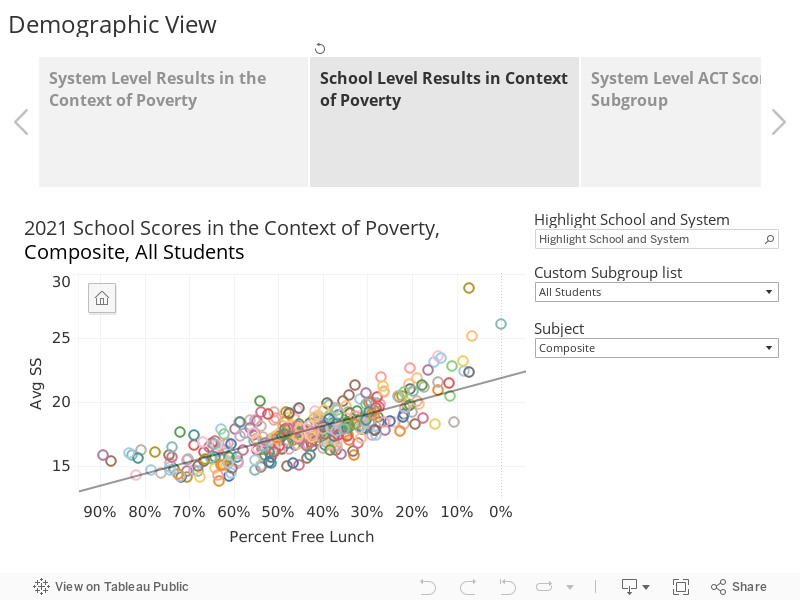
Due to the score gaps between students from different backgrounds, the demographic composition of the student body should be taken into account when evaluating a school or system’s performance. The scatterplot presents score performance in the context of the economic composition of the school system’s students.
Systems with a high percentage of non-poverty students are on the right of the scale, while schools with high poverty percentages are on the left. The higher the average scale score for the system, the higher the system appears on the graph. The line of prediction plots the expected performance level for a system considering the economic composition of the student body. Scores increase as the percentage of non-economically distressed students increase. Systems are grouped along that line of prediction, indicating a correlation between the average scale score in the system and the economic makeup.
Systems above the prediction line have outscored expectations based on economics.
A similar pattern can be seen in the array of individual high schools. However, there is more variation from the average. Taken together, the graphs tell us that the socioeconomic composition of a school influences the average score, but that systems and, to an even greater degree, individual schools do make a difference in student performance.
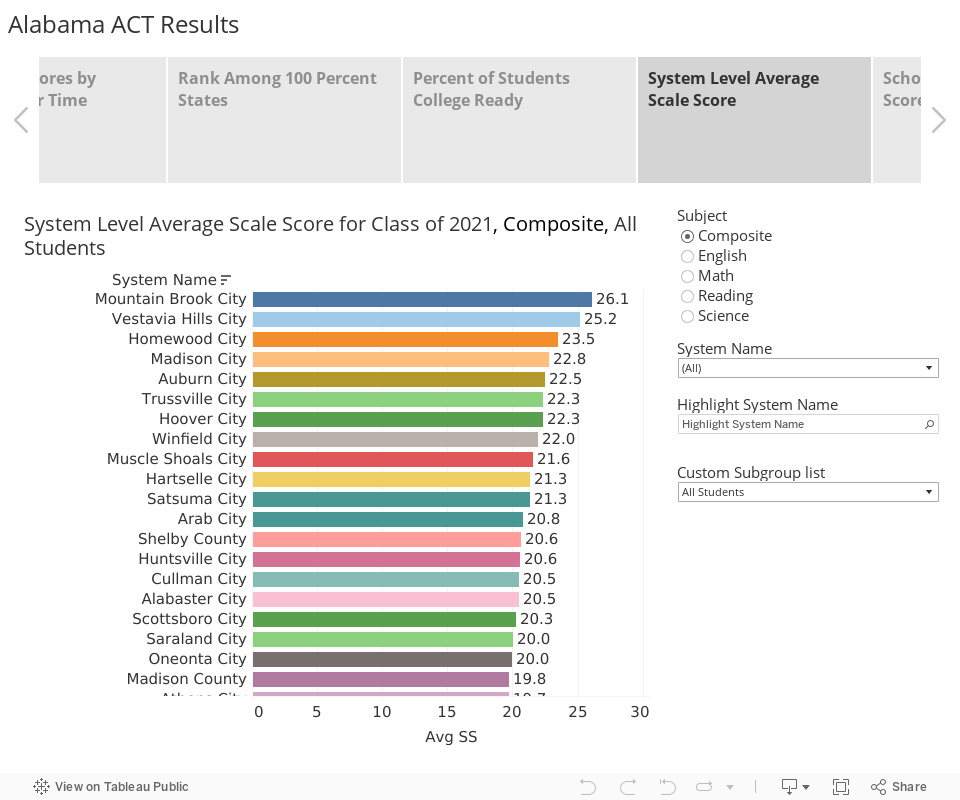
Bearing that in mind, PARCA’s visualizations of the 2021 ACT results allow the viewer to explore how their local schools and systems performed relative to others. Viewers can choose schools and systems that provide appropriate peer comparisons. In addition to comparisons by average scale score, additional views offer results by the percentage of students achieving the benchmarks in each subject. Lower poverty systems serving suburban communities tend to show the best results at the system level.
At the school level, the highest average performance is found not just among those suburban systems but also in magnet high schools in larger systems, like Montgomery County’s Loveless Academic Magnet Program (LAMP) and Huntsville’s New Century Technology High School.
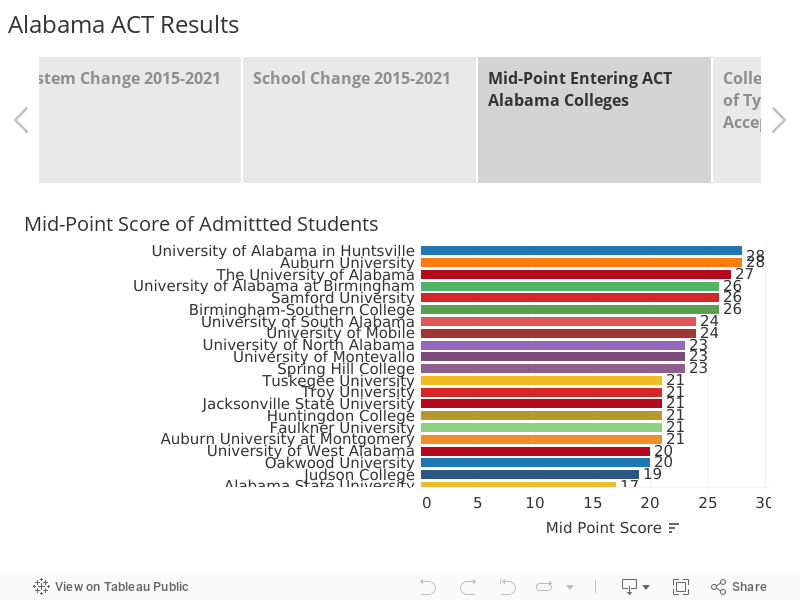
To put ACT scores in perspective, it is helpful to know the typical ACT scores for students entering college. Average scores range widely between colleges and within colleges. In Alabama, the mid-point ACT score for entering students ranges from 28 at the University of Alabama in Huntsville and Auburn University to 17 at Alabama A&M in Huntsville and Alabama State in Montgomery. As part of their mission, these historically-Black universities provide opportunity and access to students who may not have received the same level of college preparation. Many colleges have continued to waive the ACT requirement for admission and are instead relying on high school grades and other factors to assess student readiness. However, ACT scores can still play a role in admissions and in the competition for scholarships.
Deaths outnumber births, but population grows through domestic migration
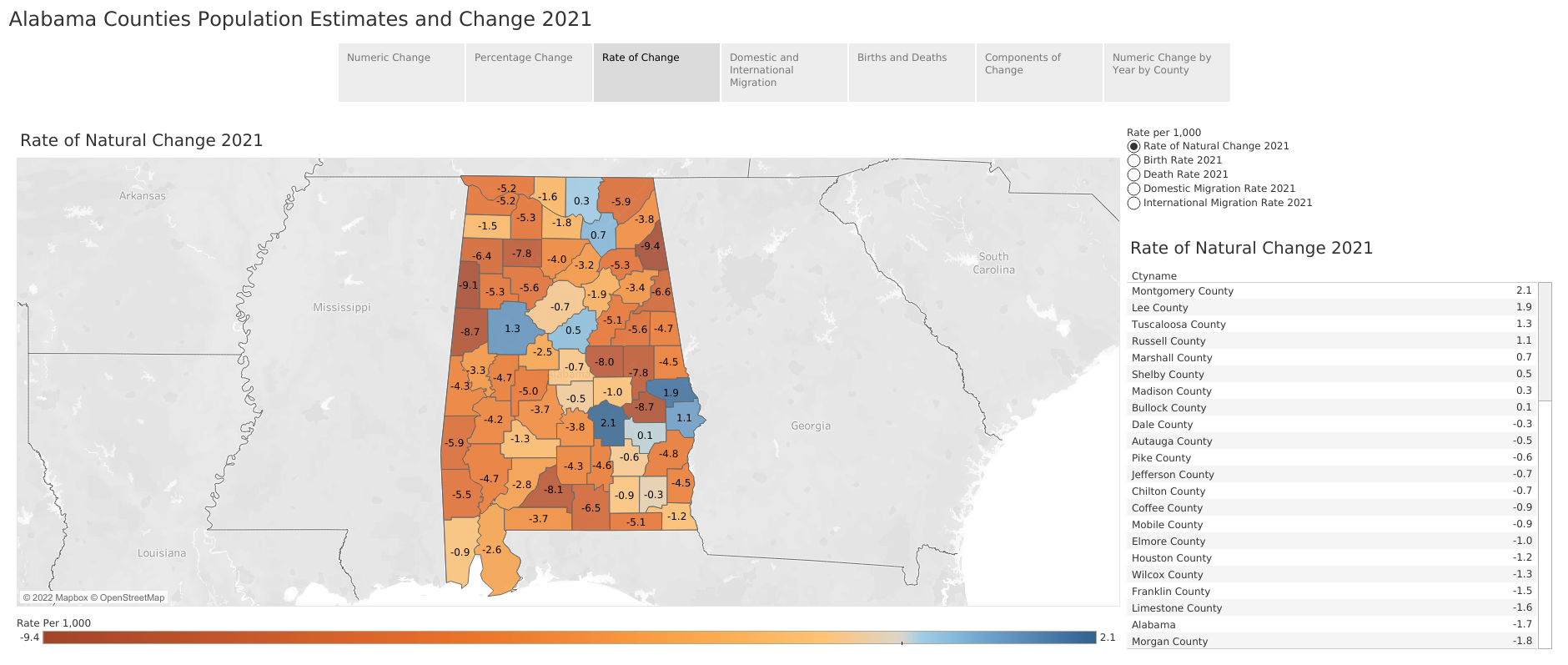
New estimates released by the U.S. Census Bureau show that more than half of Alabama counties lost population between July 1, 2020, and July 1, 2021, losses driven by an aging population, a declining birthrate, and an elevated death rate during the Covid-19 pandemic.
Statewide, the 65,868 deaths outnumbered 56,320 births, leading to a net loss through natural change of 8,548. In the visualization below, counties are shaded by their rate of natural change. Only eight counties, those in blue, saw more births than deaths. Alabama had the 4th highest death rate in the U.S., behind West Virginia, Mississippi, and Maine.
However, stronger growth through domestic migration (individuals moving from other states to Alabama, but excluding movers who are foreign-born) helped the state offset those losses. Estimates issued earlier this year put Alabama’s population at 5,039,877, up by about 15,000 or 0.3%, from 2020. A net total of 22,136 domestic migrants moved to Alabama, offsetting the loss from natural change.
Two counties accounted for about half that growth, with coastal Baldwin adding 6,780 net new residents through migration and Madison County adding 5,335. Madison County’s neighbor, Limestone, added 3,388. Other north Alabama counties like Cullman, Lauderdale, Jackson, Morgan, Marshall, and Dekalb also saw gains from domestic migration. The counties containing the three other large population centers — Jefferson, Mobile, and Montgomery — saw population declines, according to the estimates. Meanwhile, counties linked to those metro core counties — counties like Shelby and St. Clair, Elmore and Lee, and Baldwin — saw growth. Modest growth also occurred in some Wiregrass counties — Coffee, Houston, and Henry.
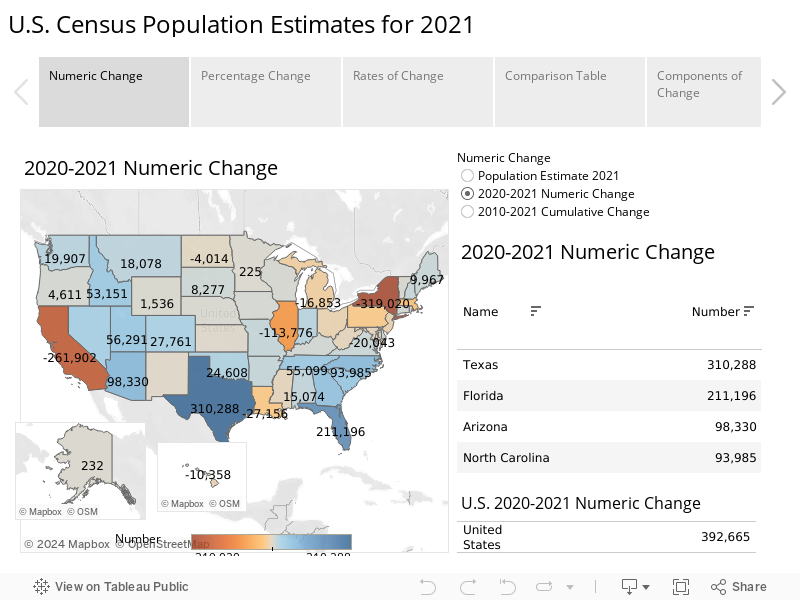
Zooming out to look at the Southeast, similar patterns are evident. Core counties in Atlanta, Charlotte, Nashville, and Memphis lost population while surrounding metro counties grew. Generally, growth was more widespread in Tennessee, Florida, the Carolinas, and the northern half of Georgia. Overall, Alabama counties bordering Georgia, Tennessee, and Florida are growing. Coastal counties on the Southeast’s East and Gulf coasts have seen growth. Counties along the interstates benefit throughout the region. Still, rural counties and whole swaths of the interior South, including counties in central and western Alabama, continue to lose population, not yet connected to the regional engines of growth.
When it comes to counties grouped into metropolitan statistical areas (MSAs), The Daphne-Fairhope-Foley, Huntsville, and Auburn-Opelika MSAs continue to show strong population growth. Among the 358 U.S. metros, they rank No. 16, 40, 50, respectively, in terms of percentage population change.
On the other hand, metro Birmingham is still not seeing the pace of growth of other Southeastern metros. Gains in Shelby, St. Clair, Bibb, and Blount counties weren’t enough to overcome Jefferson County’s estimated population loss of 5,521. Over the past decade, Jefferson County’s natural increase plus population gains from international immigration offset a steady stream of domestic outmigration. But in 2021, deaths outnumbered births by 438, and international migration accounted for a gain of only 153 people. Meanwhile, the estimates show a net loss of 5,238 domestic residents moving out of Jefferson. That produced a net population loss for the MSA in 2021. The Birmingham-Hoover metropolitan statistical area ranked 258 out of 358 U.S. metros in percentage change.
Montgomery ranked No. 248, with a slight population gain, and the Mobile MSA ranked No. 305, with a population loss of 1,326. After strong growth over the past decade, Tuscaloosa County and its metro area lost population in 2021, according to the estimate. Its growth rank ranked it No. 284 among U.S. metros.
The Auburn-Opelika MSA added 2,617 residents, according to the estimates, a growth rate of 1.5%. Dothan, Decatur, and the Florence-Muscle Shoals MSAs also showed positive growth. The Anniston and Gadsden MSAs continued to post slight declines.
Using the menus and tabs in the visualizations above, you can explore birth and death rates, numerical and percentage change of counties and MSAs in Alabama and across the U.S. The state population estimates and components of change released earlier this year are below.
And the final visualization looks back to the results of the 2020 Census and compares population counts from April 2020 and April 2010.