
Tax Reform Ranks #10 Among Alabama Voter Priorities

Background

In late 2017, the Public Affairs Research Council of Alabama (PARCA) surveyed Alabama voters to determine their thoughts about the general direction of the state and the issues that most concern them. PARCA partnered with Samford University to survey policy professionals from across the state, including academics, journalists, business and nonprofit leaders, and lobbyists. Their responses provided a list of 17 critical issues facing Alabama. PARCA partnered with USA Polling at the University of South Alabama to ask registered voters about these 17 issues. The voters’ responses generated the Top Ten list of voter priorities. Details about the survey and its methodology can be found in the full Alabama Priorities report.

Key Findings

Voters broadly agree on the critical issues facing the state.

Voters are not polarized along traditional political, ideological, racial or generational lines. There is a significant gap between the priorities of experts and the priorities of voters.

Policymakers have an opportunity to inform and educate voters on critical and systemic challenges facing the state.

Policymakers have an opportunity to respond to immediate, often highly personal issues that concern voters.

Elected officials and candidates have an opportunity to show leadership and to build broad coalitions to address Alabama’s most pressing challenges.

In the following months, PARCA will produce summary briefs on each of the top ten priorities chosen by Alabama voters, starting with #10. Each brief will answer four critical questions: what is the issue, why it matters, how Alabama compares, and what options are available to Alabama policymakers.

#10: Tax Reform

What is the Issue?

Tax reform is the 10th most important issue for Alabama voters, with 47% of voters indicating they were very concerned about the issue. Tax reform averaged 3.89 on 1 – 5 scale where 1 is “not at all concerned” and 5 is “very concerned.”

That voters are concerned about taxes and tax reform should come as no surprise. That the issue ranks tenth, however, is unexpected. The survey did not ask the direction or nature of tax reform. Certainly, voters and policymakers have differing concerns about Alabama’s tax policy. Taxes could be too high, too low, insufficient, or unfair. Recent research suggests that all of these can be true at the same time.

  • Taxes can be high – Alabama’s sales tax rates are among the highest in the country.
  • Taxes can be low – Alabama collects the lowest amount of property tax revenue per capita in the nation. The per capita collections could be doubled, and they would still be below the national average. Alabama per capita personal income tax collections are also lower than the national average.
  • Taxes can be insufficient – Alabama’s state and local governments collect less in taxes than state and local governments in any other state in the union. That means governments here have less money to spend to provide similar levels of service.
  • Taxes can be unfair – Taxes are not low for everyone. Because of the imbalance in the tax structure, taxes fall more heavily on some groups than others. Alabama’s tax system is the 12th most regressive state and local tax system in the nation,[1] meaning the poor pay a greater share of their income in taxes than the wealthy.

Why Is Tax Reform Important?

Public services in the United States, things like education, roads, and prisons, are generally funded through a mix of taxes and fees assed to all taxpayers. The structure of the federal system and the fifty state systems are complicated and the subject of ongoing debate. Voters and policymakers can and do argue over the details of the tax structure. However, there ought to be broad agreement on two fronts.

First, the tax system should generate revenue sufficient to meet the needs and demands of the public. The Alabama Priorities Project and other PARCA research suggest that many Alabamians do not believe that Alabama spends enough on public services.

Second, public revenues should be reasonably stable from year to year. However, Alabama has relied on one-time sources of revenue or unexpected windfalls to balance its books in each of the past five years. The 2017 Interim Report of the Legislature’s Joint Task Force on Budget Reform:

Year after year, session after session, the Alabama Legislature returns to Montgomery to answer the same, age-old question: “What are we going to do to fill the hole in the General Fund Budget?”  Certainly, there have been times over the years that this was not the case, but for the most part this question has been asked annually for decades.[2]

In attempting to achieve sufficiency and stability, voters and policymakers wrestle with three basic questions: Fairness – does the tax burden fall fairly across all taxpayers?; Adequacy – is tax revenue sufficient to meet the needs of modern life?; and Efficiency – Is the tax relatively easy to collect or does it place too great a burden on government or taxpayers? Jim Williams, retired PARCA Executive Director, notes “Tax problems are present in all states, but in Alabama the failure to create a fair, adequate, and efficient system of taxing and budgeting has led to what is in effect a perpetual budget crisis.”[3]

How Do Alabama Taxes Compare?

In PARCA’s 2017 report, How Alabama Taxes Compare, we reported that Alabama’s state and local governments collect less in taxes than state and local governments in any other state in the union.

In 2015, Alabama state and local governments collected a total of $15 billion in taxes, or $3,144 per resident.  Across the U.S., the median value for state and local taxes per capita was $4,379.

The median state had a per capita tax advantage of $1,235 over Alabama. In other words, if Alabama collected taxes at the per capita rate of the median state, local and state governments here would have an additional $6 billion to spend building and maintaining roads; providing police and fire protection; operating civil and criminal courts; supporting schools and colleges; libraries and parks; and the myriad of other functions government performs.

National comparisons are not always convincing because of regional economic differences, but Alabama stands out even in the Southeast. The figure below presents two sets of calculations. On the left, the Southeastern states are compared and ranked on their total state and local tax collections divided by their populations, producing a total for tax collections per capita. The chart on the right shows the per capita tax advantage of other Southeastern states over Alabama.

Alabama ranks at the bottom. The state closest to Alabama in terms of per capita tax collections is Tennessee, which collects $126 dollars more per resident than Alabama. The top Southeastern state in terms of taxes per capita is Louisiana, which collects $809 more per resident than Alabama.

As a bottom line, Alabama governments have less tax money available to pay for those services.

However, this is not widely understood. PARCA’s 2017 public opinion poll revealed that 34% of voters believe they pay about the same in taxes as those in neighboring states and 29% believe they pay more than residents of other states pay.

What Can We Do?

Voter concern about Alabama’s tax system or doubts about its adequacy and fairness can be troubling to policymakers at every level. Alabama has two sets of options: piecemeal refinements or broad-based reform.

Piecemeal Refinements

State and local governments could adjust sales tax rates. Decreasing rates will further reduce revenue. Increasing rates will make the tax system more regressive and could have diminishing returns. Sales taxes can also be very volatile. Tax collections increase and decrease as retail sales increase and decrease. This makes revenue unstable in volatile times and disastrous in periods of significant economic downturn. Moreover, changing consumer habits affect sales tax revenue. As more and more commerce shifts online, state and local tax collections are impacted.

State and local governments could expand the number of services that are taxed. Alabama applies its tax to almost all sales of goods, but it does not apply the tax to most kinds of business, professional, computer, personal, and repair services. In recent decades a greater share of economic activity has shifted toward consumption of such services. Alabama taxes 22% of services – the average state taxes 55% of services[4].

The state could increase and stabilize revenue through increases to property taxes. Property taxes are hard to change in Alabama. Caps on property taxes have been placed in the Alabama constitution, and any change to property tax rates requires approval not just from the Legislature, but also by a vote of the people.

Broad Based Reform

Since 1991, three major tax reform proposals have been developed (The Alabama Commission on Tax and Fiscal Policy Reform in 1991, The Tax Reform Task Force in 1992, and Governor Riley’s Accountability and Tax Reform Plan in 2003). As Jim Williams notes, “Experience has shown that Alabama voters are unlikely to favor a comprehensive reform package.”[5] However, while none of the major reforms were initially adopted, in the years since, a number of measures tracking or closely related to those systematic reform proposals have been adopted.

Moving Forward

Alabama’s tax system is not balanced. Policymakers can improve voters’ confidence in the tax system and stabilize revenue by seeking a better balance of taxes on income, property, and transactions – what we earn, own, and buy.

View the printable PDF brief here.

[1] Davis, C., Davis, K., Gardner, M., Heimovitz, H., Johnson, S., McIntyre, R. S., . . . Wiehe, M. (2015, January). Who Pays? 5th Edition: Alabama. Retrieved November 30, 2017, from https://itep.org/whopays/alabama/

[2]Alabama Legislature. (2017, May, p. 1). Interim Report from the Joint Task Force on Budget Reform.

[3] Williams, Jim (2017, Nov.) “Insights from Previous Attempts at Tax and Budget Reform in Alabama”

[4] Minnick, R. (2008, July. Revised 2010). Sales Taxation of Services, Retrieved November 20, 2017, from https://www.taxadmin.org/sales-taxation-of-services

[5] Williams, Jim (2017, Nov.) “Insights from Previous Attempts at Tax and Budget Reform in Alabama”

The Priorities of Alabama Voters

In 2018, Alabamians will elect a governor and five other statewide executive branch officers, 140 legislators, and scores of local officials. Those elected will lead Alabama for the next four years. These leaders should be responsive to the concerns of those they represent but also willing to help citizens understand critical, but perhaps less obvious, public policy issues. Such leadership requires understanding what issues most concern voters and what issues voters may not fully appreciate.

In this election year, PARCA surveyed Alabama voters to determine their thoughts about the general direction of the state and the issues that most concern them. We found broad agreement on the critical issues facing the state. Based on voter response, PARCA identified and ranked voters’ top 10 critical issues. Alabama Priorities explores this issue.

The Priorities

Alabama voters are eager to see improvement in K – 12 education, with 70% indicating they are very concerned about the state’s education system. Voters are worried about healthcare , particularly access and cost. With the recent resignations of a Governor, a Speaker of the House, and a state Supreme Court Justice, it should come as no surprise that voters are concerned about corruption and ethics. For many voters, mental health and substance abuse are not just theoretical problems—56% of Alabamians indicate they are very concerned about the issue. The poor and homeless have not been forgotten.

These issues, along with jobs and the economy, crime and public safety, job training and work force development, the state’s image, and tax reform comprise the top 10 list of Alabama’s priorities.

Perhaps this list should not come as a surprise. Previous polling by PARCA and other organizations have found similar results.

What is perhaps more surprising, however, is the extent to which these are shared priorities. We found few significant differences between Republicans and Democrats, liberals and conservatives, blacks and whites, or other groups. While differences exist, Alabama voters are not polarized.

Alabama Priorities

1. K-12 Education
2. Healthcare
3. Government Corruption and Ethics
4. Mental Health and Substance Abuse
5. Poverty and Homelessness
6. Jobs and the Economy
7. Crime and Public Safety
8. Job Training and Workforce Development
9. Improving the State's Image
10. Tax Reform

Experts and Voters: Differing Priorities

At the same time, while the data suggests broad agreement among voters, there is an area where significant gaps exist. PARCA surveyed business, civic, and nonprofit leaders, journalists, and academics. The differences between the priorities of these experts and voters were noticeable.

Four top 10 issues for voters fell outside the top 10 for experts:

  • Mental health and substance abuse
  • Poverty and homelessness
  • Job training and workforce development
  • Improving the state’s image

Conversely, experts identified four issues that did not register high on voters’ list of concerns:

  • Infrastructure and transportation
  • Prison and sentencing reform
  • Funding state government
  • Civil rights

Possible explanations as to why some issues are more important to voters and others more important to experts are offered in the “Differences Between Experts and Voters” section of the report. three implications are suggested.

Implications

The data suggest four implications.

  1. Voters are not polarized along traditional political, ideological, racial or generational lines.
  2. There is a significant gap between the priorities of experts and the priorities of voters.
  3. Policymakers have a two-fold opportunity to inform and educate voters on critical and systemic challenges facing the state.
  4. Policymakers have an opportunity to respond to immediate, often highly personal issues that concern voters.

This research suggests that elected officials and candidates have an opportunity to show leadership and to build broad coalitions to address Alabama’s most pressing challenges.

Read the full report here.


PARCA Gubernatorial Candidate Forum Brings Leaders Together to Discuss Alabama Priorities

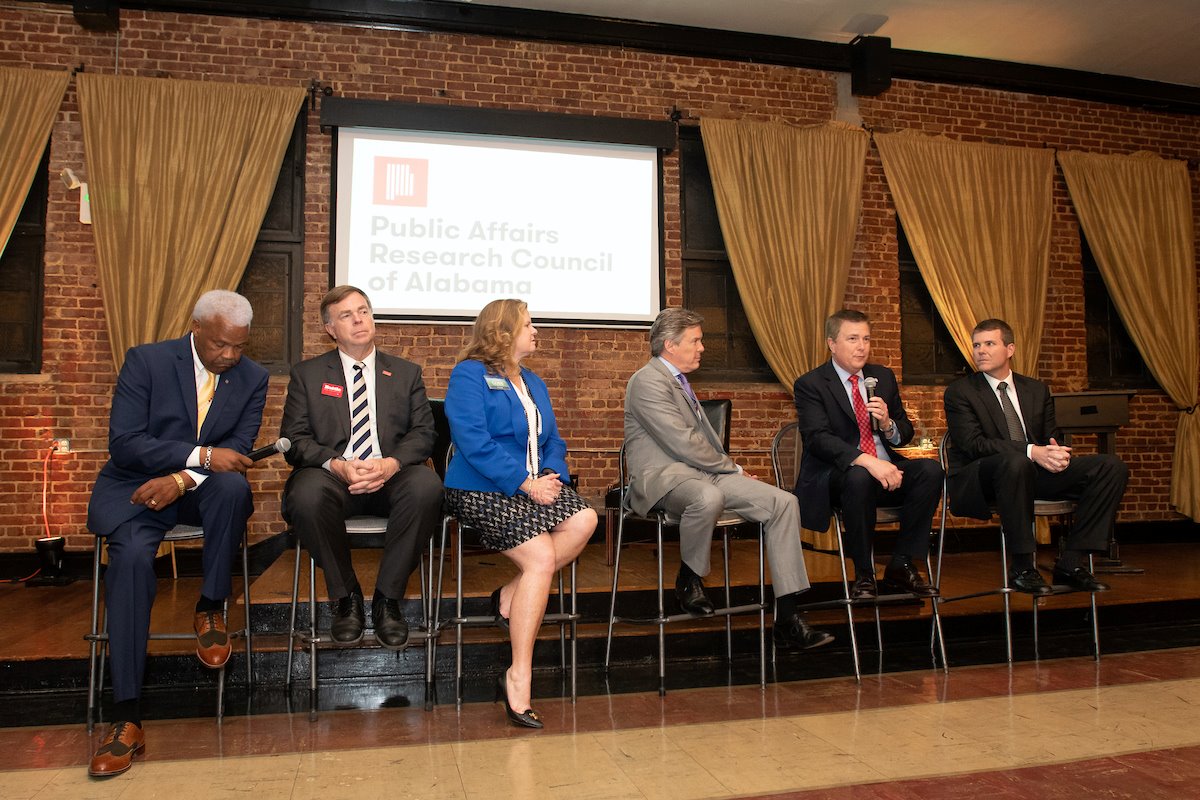
This past Wednesday, May 16th, PARCA held a 2018 Gubernatorial Candidate Forum at Woodrow Hall in Birmingham. The event was hosted by the PARCA Roundtable, PARCA’s young professionals’ group of 28 to 45-year-old civic and business leaders. It was a great opportunity for Democrat and Republican candidates to come together and express ideas in a nonpartisan environment prior to the June 5th primary election.

Participating candidates included Tommy Battle, Sue Bell Cobb, Scott Dawson, James Fields, Bill Hightower and Walt Maddox.

The forum featured one-on-one conversations with each candidate. The six conversations were led by PARCA Roundtable members Victoria Hollis, Peter Jones, and Kendra Key, young professional civic leaders Anthony Hood and Bridgett King, and WBHM News Director Gigi Douban.

A number of the questions specifically addressed the concerns of young professionals. Candidates were also asked about many of the issues most important to voters, as reported in PARCA’s recent Alabama Priorities. At the end of the event, all six candidates came to the stage for questions from the audience of around 135.

Some of the main ideas expressed throughout the evening focused on education, taxes, workforce development, the correctional system and the state’s image.

A collegiality emerged between the candidates throughout the evening, and for a few moments, there were no political parties, only public servants interested in improving the state of Alabama.


Alabama Priorities makes its debut

What issues most concern Alabamians? What options do policy makers have to address these issues? These are the questions behind Alabama Priorities – a new initiative of the Public Affairs Research Council of Alabama. We unveiled the initiative at PARCA’s 2018 Annual Meeting last Friday. The presentation can be viewed here.

Step 1: Identify Alabama Issues

In partnership with Samford University, PARCA conducted an open-ended survey of Alabama-based academics, journalists, and civic, business, and nonprofit leaders to create a list of the most serious issues facing Alabama in 2018. More than 150 experts participated, producing a list of 17 issues.

Civil RightsHealthcareK-12 Education
Constitutional ReformHigher EducationMental Health and Substance Abuse
Crime and Public SafetyImproving the State's ImagePoverty and Homelessness
Environmental ProtectionInfrastructure and TransportationPrison and Sentencing Reform
Funding State GovernmentJob Training and Workforce DevelopmentTax Reform
Government Corruption and EthicsJobs and the Economy

Step 2: Rank Alabama Issues

With issues identified, PARCA again collaborated with Samford University to design a random digit dial telephone (50% landline and 50% mobile) survey of registered voters. The poll was conducted by the USA Polling Group at the University of South Alabama in December 2017. The survey collected 468 responses with a margin of error of 4.5%. Responses were weighted for race, gender, education, and age. Below are the top ten issue determined by Alabama voters.


ALABAMA PRIORITIES

Alabama Priorities

1. K-12 Education
2. Healthcare
3. Government Corruption and Ethics
4. Mental Health and Substance Abuse
5. Poverty and Homelessness
6. Jobs and the Economy
7. Crime and Public Safety
8. Job Training and Workforce Development
9. Improving the State's Image
10. Tax Reform

Step 3: Reveal Alabama Priorities
PARCA revealed the 10 priorities, as ranked by Alabama voters, at its 2018 Annual Meeting: The 21st Century Governor, on February 2, 2018. A full report and analysis of the data is forthcoming.

Step 4: Share Alabama Priorities

PARCA will publish a series of policy briefs on each of the top ten priorities in the weeks leading to the general election in November 2018. The briefs will be short, easy-to-understand, nonpartisan descriptions of the priority and will answer four questions.

What is the issue?

Why does it matter?

How does Alabama compare?

What options does Alabama have?


How Alabama Taxes Compare

Since late 1988, the Public Affairs Research Council of Alabama has produced an analysis of Alabama’s tax revenues. Relying on the U.S. Census Bureau’s annual survey of state and local governments across the country, we are able to determine how Alabama taxes and revenue compare to other states. In the analysis, state and local spending are considered together, because states vary greatly in how they divide up the responsibilities for funding government services. This report considers data from 2015, the most recent year available.

Alabama’s state and local governments collect less in taxes than state and local governments in any other state in the union. This has been a basic fact of life in this state since the early the 1990s. It lies at the root of our perpetual struggles to balance state budgets. It underlies the difficulties we face when trying to provide to our citizens the level of government services enjoyed by citizens in other states.

As a bottom line, Alabama governments have less tax money available finance the operation of services like schools, roads, courts, health care, and public safety.

Explore our latest report, How Alabama Taxes Compare, and see how Alabama’s tax system fares against our southeastern neighbors, and what that means for our state. If you want to compare Alabama’s per capita taxes to those in other states, PARCA-designed interactive tables are available online. 


How Alabama Roads Compare, 2017

PARCA’s latest report, How Alabama Roads Compare, provides an in-depth analysis of the conditions, funding and future of our state’s roads and bridges. Data presented in the report can also be viewed through interactive tables here.

Alabama Roads: Where are we now?

Alabama’s roads and bridges are in relatively good condition compared to other Southeastern states. The percentage of roads in good condition is higher than most other states and the percentage of roads in poor condition is lower than most other states. The percentage of bridges in need of replacement because of deficiency is about average for the Southeast.

However, those generally good conditions on existing roads have come at a cost.

The Alabama Department of Transportation has had to devote an increasingly large share of its budget to preserving the existing road system, with a shrinking pool of money available for new projects to address congestion or expand the road system to foster transportation improvements and economic development.

Currently, only $150 million per year is available for system enhancement and expansion projects, a drop in the bucket considering the billions of dollars in projects needed to address existing congestion issues, much less the additional billions that would be needed to finance aspirational projects like Birmingham’s Northern Beltline, a new Mobile River bridge, and variety of other projects desired by communities large and small.

Alabama’s road spending in recent years has been supplemented by more than $1.3 billion in borrowing. That has allowed state and local governments to tackle needed improvements and perform in the present projects that will pay dividends in the future. However, that borrowing authority has been exhausted, and future road spending will be curtailed. The infusion of borrowed money is ending and the demands of paying back what has already been borrowed money will consume a greater share of road money.

This impending road revenue crunch is rooted in a fundamental problem in how we pay for roads: a set 18-cents per gallon motor fuels tax. Per-gallon motor fuels taxes were last raised in the early 1990s. The buying power of that 18 cents on each gallon has eroded due to inflation. On top of that, the greater fuel economy of cars and trucks on the road today means that less gas in being purchased to fuel more miles of travel.

The wear and tear of traffic on the roads continues to increase, but revenue from per-gallon taxes is not keeping pace. Per vehicle mile traveled, Alabama is collecting half what it did in the early 1990s, when adjusted for inflation.

In the immediate term, the 2018 transportation budget will contain about $200 million less in revenue than it has enjoyed for the past 5 years, revenue provided through the ATRIP borrowing program. The debt service required to pay that borrowing back has been steadily climbing. In 2018, it will leap to $114 million, almost $50 million more than the 2017 total, and remain locked in for the next 19 years. As a bottom line, in 2018, there will be about $250 million less to spend on roads than there was in 2017.

Where do we want to be in the future?

Alabama needs sufficient revenue to pay for the upkeep of its current system, plus an adequate pool of money available to add capacity to address congestion problems and to improve the transportation network. That revenue for roads also needs to cover the cost of paying back the money the state has already borrowed.

How do we get there?

Alabama hasn’t raised its per gallon gas tax in 25 years. Only 8 other states have gone as long without an increase. In recent years, most states have raised per gallon taxes and have also adopted mechanisms to address the drain on buying power created by inflation and greater fuel economy.

In the past several legislative sessions, Alabama lawmakers have introduced various proposals to address the impending shortfall in road funding but none of those proposals have gathered sufficient support.

As those proposals resurface in subsequent sessions, attention should be paid not only to preventing the immediate shortfall but to preventing the perpetual erosion of road dollars. Many of our Southeastern neighbors have crafted long-term approaches to road funding from which Alabama could learn.

Click here to read the full report, including information on traffic vs. capacity, construction and maintenance, road debt and more.


Student Achievement Matters: The Future of Student Assessment in Alabama

In June 2017, the Alabama State Board of Education voted to cancel its contract with ACT for the administration of the ACT Aspire, a suite of standardized tests which, for the past four years, has served as the primary assessment tool Alabama used to gauge the annual academic progress of public school students across the state. Identifying the best replacement for Aspire is crucial. It’s a decision that affects everyone who cares about the quality of public education, from students, teachers, and parents to the leaders of government, education, and business.

PARCA’s latest report, Student Achievement Matters: The Future of Student Assessment Is Now, lays out the recent history of assessments, what state and national assessments tell us about the performance of Alabama students, and calls attention to the steps we should take from here.

It is vital that Alabama have an honest, rigorous, enduring test if students, parents, teachers, education leaders, and the state as a whole are going to have a realistic picture of Alabama’s educational system and an effective tool for gauging progress. An annual assessment of student achievement is required by federal law. State education leaders have indicated they will use an assessment provided by a different testing company, Scantron, in 2018.

Meanwhile, a process for determining a long-term replacement has begun. These decisions on the future of Alabama’s statewide assessments are critical. These assessments are a cornerstone of the state’s education accountability system. They are required by federal law. The assessments should tell us how students, schools, and systems are performing regarding state standards and in comparison to other peers, both in Alabama and in the nation at large.

The new report, commissioned by the Business Education Alliance and prepared with policy expertise from A+ Education Partnership, describes what the state should be looking for in a new assessment system and the process that should be in place for its selection.

A comprehensive system of high-quality student assessments should be an efficient system and produce the necessary information with the least amount of assessment. Student assessments are used to make vital decisions about instruction, interventions and support, advanced educational opportunities, and policies. High-quality, standardized student assessments are essential for evaluating equity among schools and within them.

Most importantly, assessments should be a tool for the growth of individual students, a true measure of strengths and weakness, and a real-world appraisal of a student’s position on the path to college and career readiness. In the globally competitive, technologically advanced economy of the 21st century, it is imperative that our graduates receive an education equal in quality to that received by students in other states. That is the only way our graduates can succeed, and our state can attract employers looking for qualified employees.

The decisions that will have to be made on the future of assessments in Alabama must be made with broad engagement and buy-in from the educational community, its citizenry, and the state’s political and business leadership. Student achievement matters to us all.

View the full report here.


Together We Can – Charting a Course to Cooperation for Greater Birmingham

PARCA’s latest report, commissioned by the Community Foundation of Greater Birmingham, focuses on the fragmentation of the Birmingham region, the challenges it causes, and potential solutions exemplified by other metro areas around the country.

With the clouds of Jefferson County’s bankruptcy lifting and downtown Birmingham showing impressive signs of revival, optimism about the region’s future is high.

Considering the positive signs, it’s important to ask whether the community is prepared and positioned to capitalize on its current momentum.

In recent decades, Birmingham and its metro area have underperformed in job and population growth in comparison to comparable cities. That begs the question: Why?

Nationally, a substantial body of research indicates that metro areas with more broad-based, cooperative governmental arrangements grow faster and generate greater prosperity than metro areas that are governmentally fragmented, divided into a multitude of independent municipalities.

The region’s central city of Birmingham is surrounded by more independent suburbs than any other southern city. This pattern of fragmentation has consequences. It leads to duplication, creates intra-regional competition, concentrates economic advantage and disadvantage, and diffuses resources and leadership. It makes it difficult to arrive at consensus, pursue priorities of regional importance, or deliver services that transcend municipal boundaries. In sum, it puts the metro area at a disadvantage.

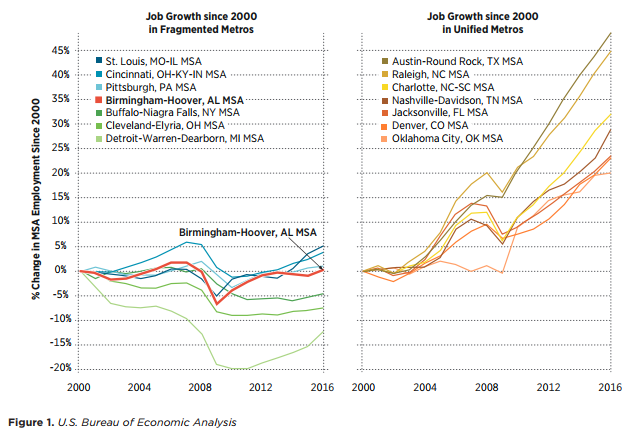
Figure 1 compares job growth since 2000 in two groups of metropolitan areas. The seven cities on the left are fragmented like Birmingham: a diminished central city ringed by a multitude of suburbs.


Figure 1

The seven metros on the right have governmental structures that unite the region. In the more unified metros, job growth since 2000 ranges from 20 percent to 50 percent. In the fragmented metros, job growth ranges from 5 percent to -12 percent.

Average annual employment in Birmingham-Hoover MSA has increased by only 0.24 percent since 2000.

The same contrast emerges when comparing median income and poverty and unemployment rates: In cities where government is fragmented, growth is slower, and social and economic problems are more concentrated.

The negative effects of fragmentation weigh not only on the center city but also on the metropolitan area as a whole. The fortunes of the central city and its suburbs are interlocked.

Fragmentation is a long-term process, a deeply ingrained pattern of development that Birmingham shares with northern cities that have a similar industrial heritage. It is not easily undone. In no instance in the post-World War II era has there been a mass political consolidation that dissolved existing cities or school districts. However, cities across the country have developed alternative approaches that promote unity and increase cooperation within their metro areas.

In 2016, the Community Foundation of Greater Birmingham commissioned the Public Affairs Research Council of Alabama (PARCA) to conduct a study of the current structure of government in Greater Birmingham, with Jefferson County as its primary focus. The study was to examine Greater Birmingham’s historic development and its current state in comparison with other cities, to describe different options other cities have pursued to overcome fragmentation, and finally, to explore how those different options might work in the Birmingham context.

This resulting report was developed with advice and review from a Strategic Advisory Group convened by the Community Foundation. Members of the Strategic Advisory Group were selected to provide a range of perspectives representing the larger Jefferson County community.

Locally, a wide range of public officials from the central city, the suburbs, and the county were also consulted, as were leaders in business and civic groups.

KEY FINDINGS

Fragmentation has led to a decline in Birmingham’s prominence and its ability to lead the region.

In 1950, Birmingham was the 34th largest city in the U.S. According to the latest population estimates, the city has fallen out of the top 100. Though the latest estimates indicate the city may have halted its population decline, other Alabama cities where growth is strong may eventually displace Birmingham as Alabama’s largest city.

The population of the City of Birmingham now represents only 32 percent of Jefferson County’s population compared to 60 percent in 1950. The city still holds a position of regional leadership thanks to its ability to draw taxes from businesses and commuters who come into the city to work or shop. Over 90,000 people commute into the city each day, filling more than half of the jobs in the city. According to PARCA’s analysis, city residents contribute 33 percent of city taxes, non-residents contribute 28 percent, and businesses 39 percent.

However, Birmingham’s role as chief supporter of regional assets and projects is under increasing strain, as it struggles to meet not only that role but also the needs of economically distressed neighborhoods and residents.

Fragmentation is a drag on metropolitan growth.

The Birmingham-Hoover MSA is currently the 49th largest in the U.S., but its growth in employment and population is slow compared to peer MSAs. Growth is particularly lagging in its central county, Jefferson. Recent projections estimate Jefferson County will add only 8,967 new residents by 2040, a 1.4 percent increase over the current population.

Greater Birmingham has not developed a viable alternative for regional leadership.

While Jefferson County has positioned itself to better play a regional leadership role thanks to recent improvements in its finances and management, it still lacks an executive branch. Nearly half of the large counties in the U.S. are now headed by an elected CEO, creating a strong and capable executive branch charged with the management of the county government. Jefferson County is still governed by a five-member commission elected by district. Additionally, the 26-member Jefferson County Legislative Delegation exercises substantial control over local affairs.

Greater Birmingham needs a spirit of governmental innovation.

Across the country, local governments are innovating with form and function, finding new ways to collaborate, economize, and deliver better customer service. Greater Birmingham need not be bound to traditional ways of doing things.

INSIGHTS FROM OTHER CITIES

PARCA’s research identified four different approaches cities and metro areas take toward building and maintaining regional unity. Four cities representing the four different approaches were selected for study.

The four approaches are:

1. Functional Consolidation

Decreasing duplication and increasing efficiency through cooperative agreements between local governments.

Example Metro: Charlotte, North Carolina

2. Modernizing County Government

Structuring county government to provide regional leadership.

Example Metro: Pittsburgh, Pennsylvania

3. Cooperation Through Regional Entities

Using regional bodies to deliver services or coordinate strategy on a region-wide basis. These can be public or private, or a fusion of the two.

Example Metro: Denver, Colorado

4. Political Consolidation

Most often, the merger of the central city with the central county, creating an umbrella metro government to deliver regional level services.

Example Metro: Louisville, Kentucky

Once labeled “the most segregated city in America,” Birmingham is justly proud of its historic role in breaking down the walls of segregation that once legally separated blacks and whites.

The time is now right to re-examine the barriers to unity that were created in the past and develop a new approach that better meets the needs of all the people in the Birmingham metropolitan area—urban, suburban, and rural. No one approach rules out the others. In crafting an approach that meets its unique needs, Birmingham might borrow ideas from each.

This is not a new issue for the region, and greater Birmingham is not alone in having tried multiple times to resolve it.

Louisville and Nashville each failed twice before achieving governmental consolidation, and Charlotte created its intergovernmental cooperation strategy as an alternative to unachievable structural change. Pittsburgh took a first step to attack fragmentation by reforming county government, just as Denver did by creating special-purpose regional authorities with their own tax sources.

The question of community unity has been a recurring strain in Birmingham’s history. Greater Birmingham was catapulted to the status of major American city through a consolidation in the first decade of the 20th Century. Multiple votes from the 1940s through the 1960s presented city-suburban merger as an option but failed to garner adequate support. A different approach, the Metropolitan Area Project Strategies, was proposed in the late 1990s.

With the negative effects of fragmentation having become very clear, it is time for fresh ideas and new conversation about how Greater Birmingham can chart a new, more prosperous course. The public seems ready to engage in this conversation.

View the full report here and access additional components of the project here.


PARCA Roundtable Legislative Symposium

The Public Affairs Research Council of Alabama and the PARCA Roundtable will be hosting the PARCA Roundtable Legislative Symposium on June 23, 2017 from 7:30 – 9:30 a.m. at The Harbert Center in downtown Birmingham.

The Symposium will be a review of the 2017 Legislative Session by CEOs of major advocacy organizations in Alabama, including:

  • A+ Education Partnership
  • Alabama Appleseed Center for Law & Justice
  • Alabama Arise
  • Alabama Education Association
  • Alabama Policy Institute
  • Alabama Rivers Alliance
  • Business Council of Alabama

The panel will be moderated by Don Dailey, News and Public Affairs Director at Alabama Public Television and Host of Capitol Journal.

Tickets for the breakfast event are $25. Register here today!


PARCA compares municipal finances in Alabama, gets mayors’ perspective

How Alabama Cities Finances Compare

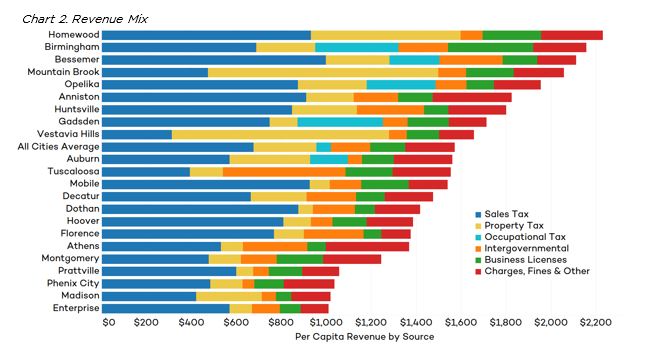
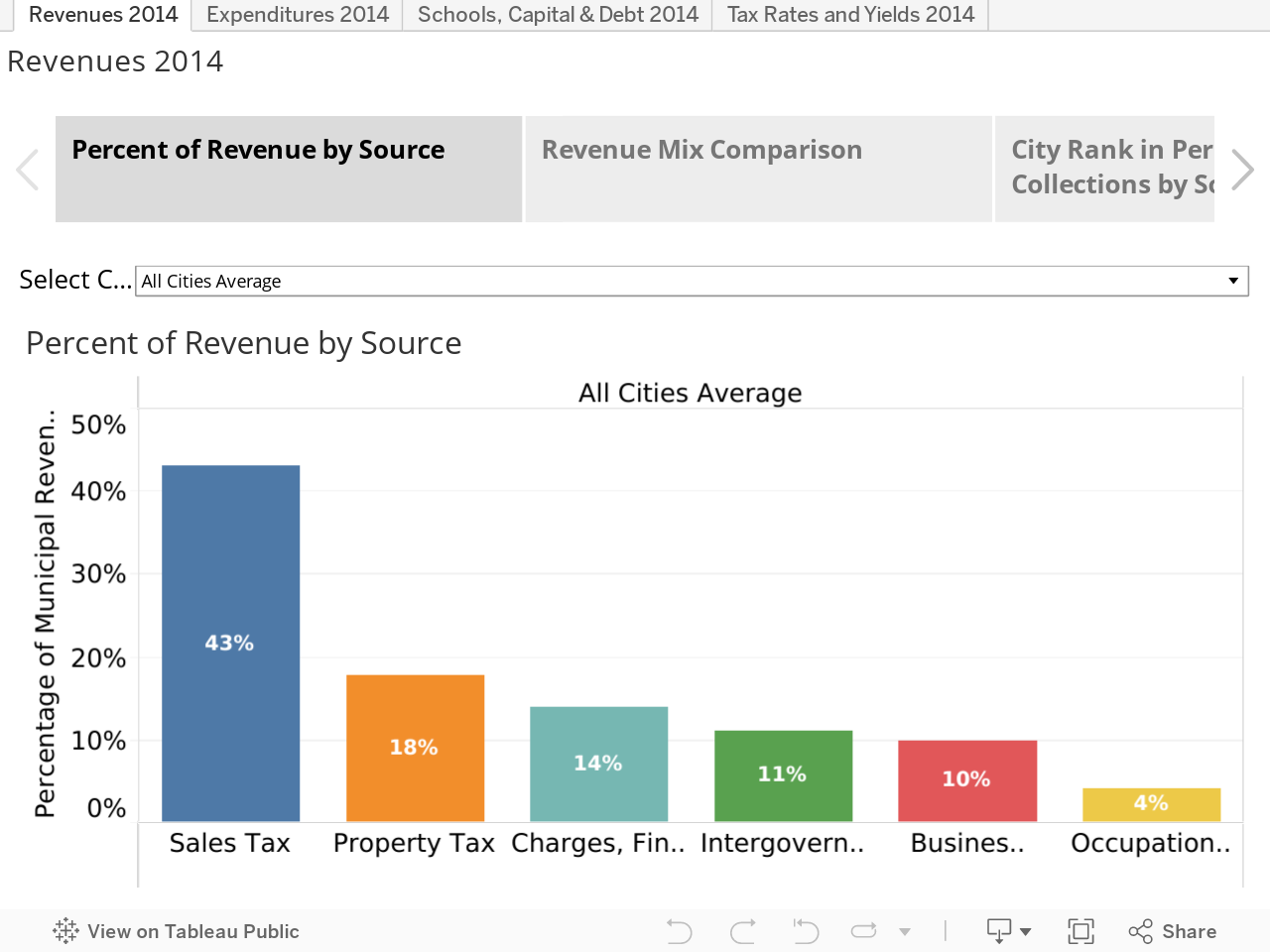
How Alabama City Finances Compare is the ninth edition of PARCA’s study of Alabama city finances. This report provides basic information on municipal revenues, expenditures, and general fund balances from the most recent year available. The comparisons are in per capita amounts (dollars divided by resident population) so that cities of differing populations can be compared with one another. This edition of the report includes data on 22 cities, generally those having a population over 20,000.

The information provided can be valuable for city officials to use in benchmarking with their peers and for citizens to see how their municipality ranks financially among comparable cities within the state.

Municipal Executives Opinion Survey

In conjunction with the report on city finances, PARCA is also releasing the Municipal Executives Opinion Survey, a survey of 127 mayors and city executives from across Alabama. Responses indicate that these city leaders are generally optimistic about economic conditions and the stability of revenue sources in the coming year, although many expect increased HR costs, as well.

Despite the optimism, executives face challenges, too. There appear to be substantial demands for infrastructure improvements without a letup in expectations regarding public safety, human services, or government operations. Priorities for the coming year emphasize economic development and jobs, education, and building or repairing roads, sidewalks, and parks.