
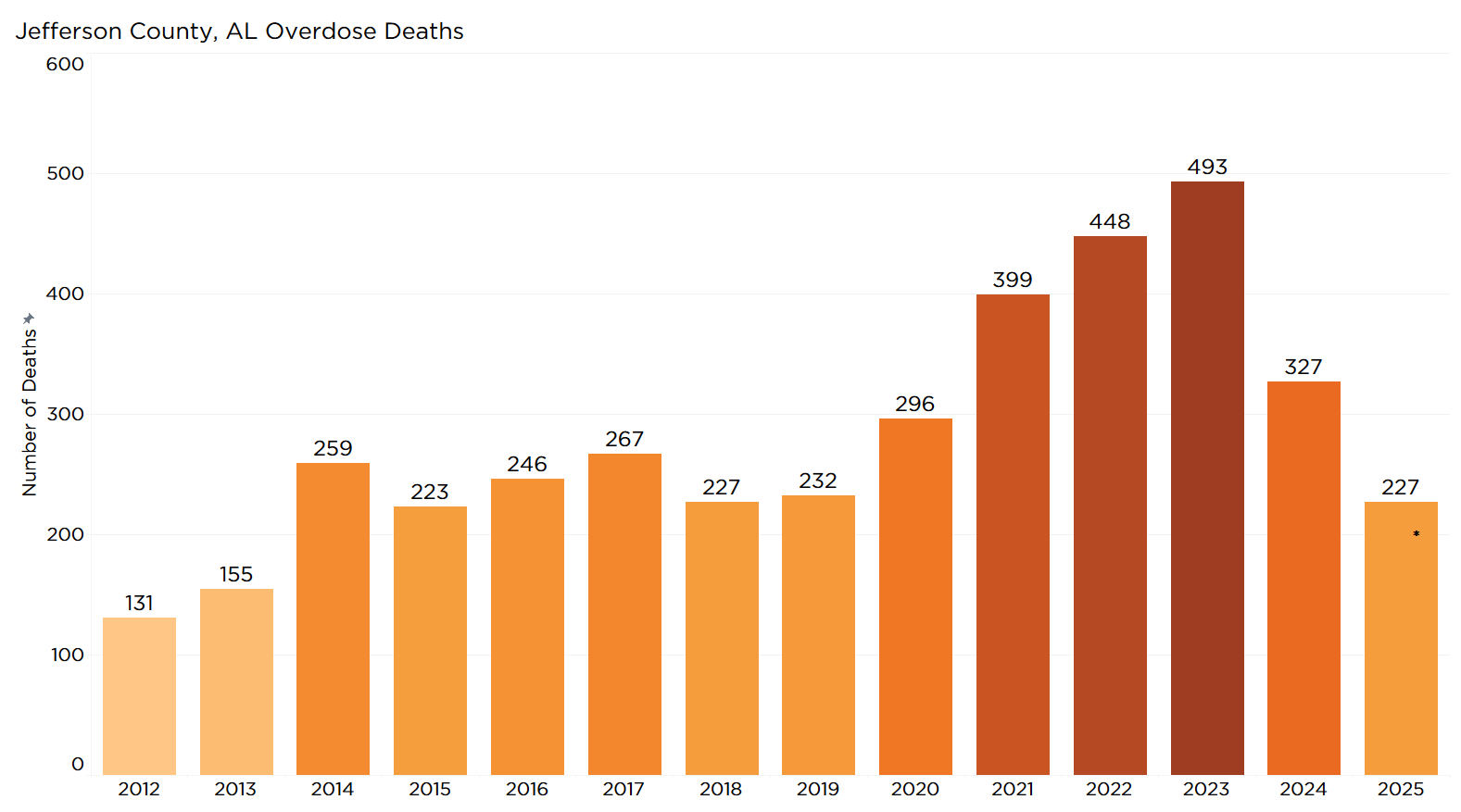
Deaths from drug overdose dropped sharply in 2024 and 2025, due in part to bold policy decisions, the deployment of overdose reversal treatments, and the strategic use of data to target addiction prevention and recovery outreach.
The story of how that came about was the focus of PARCA’s 2026 Annual Forum – From Crisis to Collaboration: How Data, Policy, and Partnership Saved Lives in Alabama.
The March 6 event at Birmingham’s Harbert Center featured leaders who helped bring about the decline, including policymakers from the Legislature, public health, and mental health agencies, as well as frontline doctors, first responders, and peer recovery specialists, who are working to combat addiction.
Video recordings of the program are featured below, along with Governor Ivey’s keynote address at the Governor Albert Brewer Legacy Lunch.
Background
In the first half of the 2010’s, Alabama had the nation’s highest opioid dispensing rate, with 121 pills dispensed per Alabama resident that year, according to the CDC. Then, in the midst of the pandemic, a surge of fentanyl in the street drug supply sent an already high rate of overdose deaths soaring. Presentation slides available here.
In response, state and local officials teamed to create an innovative set of policies, programs, and partnerships that empower frontline responders and direct service providers to use their experience and expertise to tackle the addiction crisis.
View each session below.
Peer Support and the Path Home
John Bayles, Program Director at Birmingham’s Recovery Resource Center, and Stacey Fuller, Case Manager with the Birmingham Reentry Alliance, opened the program with a conversation about their own experiences with addiction and long-term recovery. They shared deeply personal accounts of their paths through addiction, incarceration, and recovery, highlighting how their lived experiences allow them to better assist others. Fuller, an Army veteran and former nurse, talked about the pressure on healthcare providers to prescribe opioids when pain was added as the “fifth vital sign” in the mid-1990s. Both discussed the vital role that peers like themselves can play in connecting with individuals experiencing addiction who may feel angry, guilty, or hopeless in traditional clinical settings.
Panel One: Confronting the Crisis: Perspectives from Jefferson County
Panel One reflected the collaborative public health response to the opioid epidemic in Jefferson County. Participants detailed how data-driven strategies and the passage of critical harm-reduction legislation helped reduce overdose deaths. A central theme was the importance of lived experience, as recovery peers and grieving families successfully lobbied to reduce the stigma surrounding addiction and harm reduction. Speakers described the evolution from isolated efforts to a unified community framework that established the Recovery Resource Center and expanded access to treatment. Ultimately, the panel emphasized that sustainable funding and continued partnership are essential to addressing the ongoing challenges of the evolving drug crisis.
John Bayles of Recovery Resource Center moderated the panel. Participants included:
- Mark Wilson, MD, Jefferson County Health Officer, 2011-2023
- Darlene Traffanstedt, Medical Director, Alabama Medicaid Agency
- Hon. Allen Treadaway, Alabama House of Representatives
From Crisis to Collaboration: The Formation and Function of the Alabama Opioid Overdose and Addiction Council
Kimberly Boswell, Commissioner of the Alabama Department of Mental Health, spoke about the strategic efforts to address the opioid and drug crisis through multi-agency collaboration. Presentation slides available here. Commissioner Boswell, State Health Officer Scott Harris, and State Attorney General Steve Marshall co-chair the Alabama Overdose and Addiction Council, which includes numerous committees focused on tackling the crisis through data-sharing, inventive policymaking, and close communication with frontline workers. Commissioner Boswell emphasized the importance of data sharing agreements and a governance structure that make it possible for agencies to use sensitive data to rapidly inform prevention and response efforts, ultimately leading to a substantial reduction in overdose deaths and enabling the creation of a comprehensive, coordinated strategy that targets resources where they are most needed to save lives.
Innovating and Iterating: Voices from Across Alabama
The second panel featured perspectives from frontline workers across Alabama who are doing creative work to ensure that people in crisis have access to the support they need. Speakers highlighted the necessity of low-barrier medical clinics and integrated street psychiatry to reach populations who struggle with traditional treatment hurdles. They stressed the importance of empathetic, human-centered care, which includes understanding substance use as a coping mechanism for mental illness and unprocessed trauma. They also discussed the importance of creating space for law enforcement to receive continuing education and engage in dialogue with clinical experts to address technical concerns and facilitate effective collaboration across the different sectors. Finally, the group noted that ongoing education and policy reform would be essential to staying ahead of the crisis, specifically regarding harm reduction tools like expanded drug testing to combat lethal new contaminants.
Leah Nelson of PARCA facilitated the panel. Participants included:
- Reggie Parker, Owner, Parker Counseling and Consulting Services
- Will Rutland, MD, UAB Heersink School of Medicine, Medical Director, Street Psychiatry Clinic
- Jonathan Riley, CRSII, OD2A Outreach, People Engaged in Recovery
- Leah Leisch, MD, Assistant Professor, UAB Heersink School of Medicine
Governor Albert Brewer Legacy Lunch
Governor Kay Ivey provided the keynote address for this year’s Governor Albert Brewer Legacy Lunch. In her address, Gov. Ivey outlined a clear trajectory of progress and commitment in Alabama regarding two pressing issues—the opioid crisis and education reform. The Governor emphasized Alabama’s progress in combating opioid overdoses and detailed substantial efforts to improve the state’s education system, highlighting measurable improvements and ongoing initiatives. Through strategic programs, legislative action, and community involvement, Alabama has made significant gains in reducing overdose deaths and improving educational outcomes, with continued focus on sustaining and accelerating this progress for future generations.